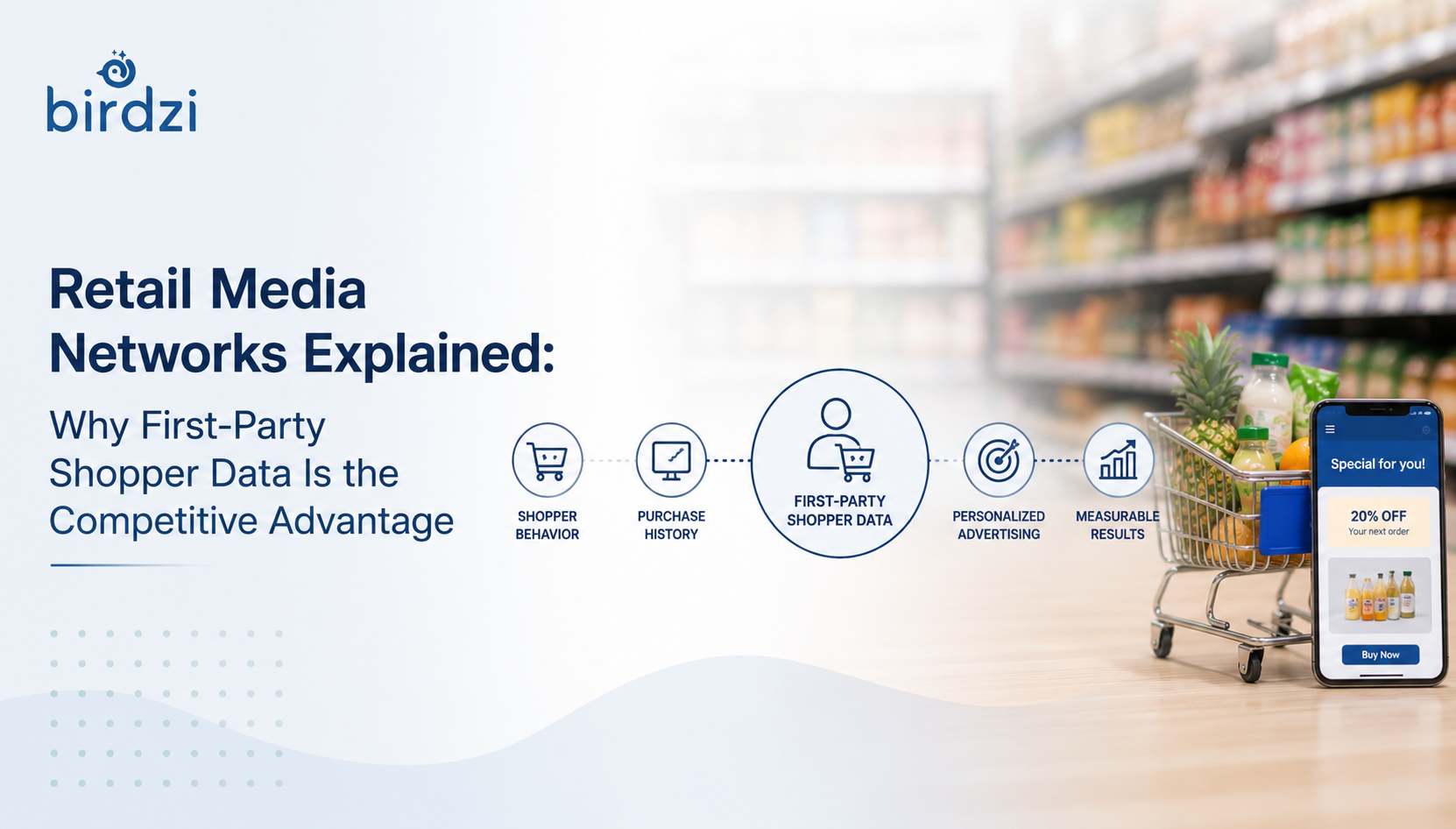
Retail media networks have quickly become one of the most important growth opportunities for grocery retailers. As consumer expectations continue to evolve and privacy regulations reshape digital advertising, retailers are shifting their focus from third party audience data to something much more valuable: first party shopper data.
Every interaction a shopper has with a grocery retailer creates useful information. Whether they scan a loyalty card at checkout, browse products online, redeem a digital coupon, or purchase through a mobile app, they are generating insights that help retailers better understand their needs and shopping habits.
This information is transforming the way grocery retailers engage customers and collaborate with consumer packaged goods brands. Instead of relying on broad advertising campaigns, retailers can deliver relevant promotions based on actual shopping behavior, creating a better experience for shoppers while improving advertising performance.
For grocery retailers, first party shopper data is no longer just a marketing asset. It has become a true competitive advantage.
What Is a Retail Media Network?
A Retail Media Network, commonly known as an RMN, is a retailer owned advertising platform that allows brands to promote products directly to shoppers using the retailer’s digital channels and customer insights.
Unlike traditional advertising, Retail Media Networks use real customer behavior to deliver highly relevant advertisements and promotions.
These channels may include:
- Ecommerce websites
- Mobile applications
- Search results
- Loyalty programs
- Digital coupons
- Email marketing
- Personalized recommendations
- In store digital displays
Instead of showing advertisements to a broad audience, brands can reach shoppers who are already interested in similar products or have previously purchased related items. This creates a more valuable experience for both customers and advertisers.
Why Retail Media Networks Are Growing So Quickly
Retail media has become one of the fastest growing areas of digital advertising because it benefits everyone involved.
Retailers create a new revenue stream.
Brands reach highly relevant shoppers.
Customers receive promotions that match their interests instead of generic advertisements.
Several industry trends are driving this rapid growth:
- The decline of third party cookies
- Greater focus on customer privacy
- Rising ecommerce grocery sales
- Increased investment in personalization
- Better measurement of advertising performance
As competition continues to increase, grocery retailers are looking for new ways to strengthen customer loyalty while helping brands maximize their advertising investment.
Retail Media Industry Statistics
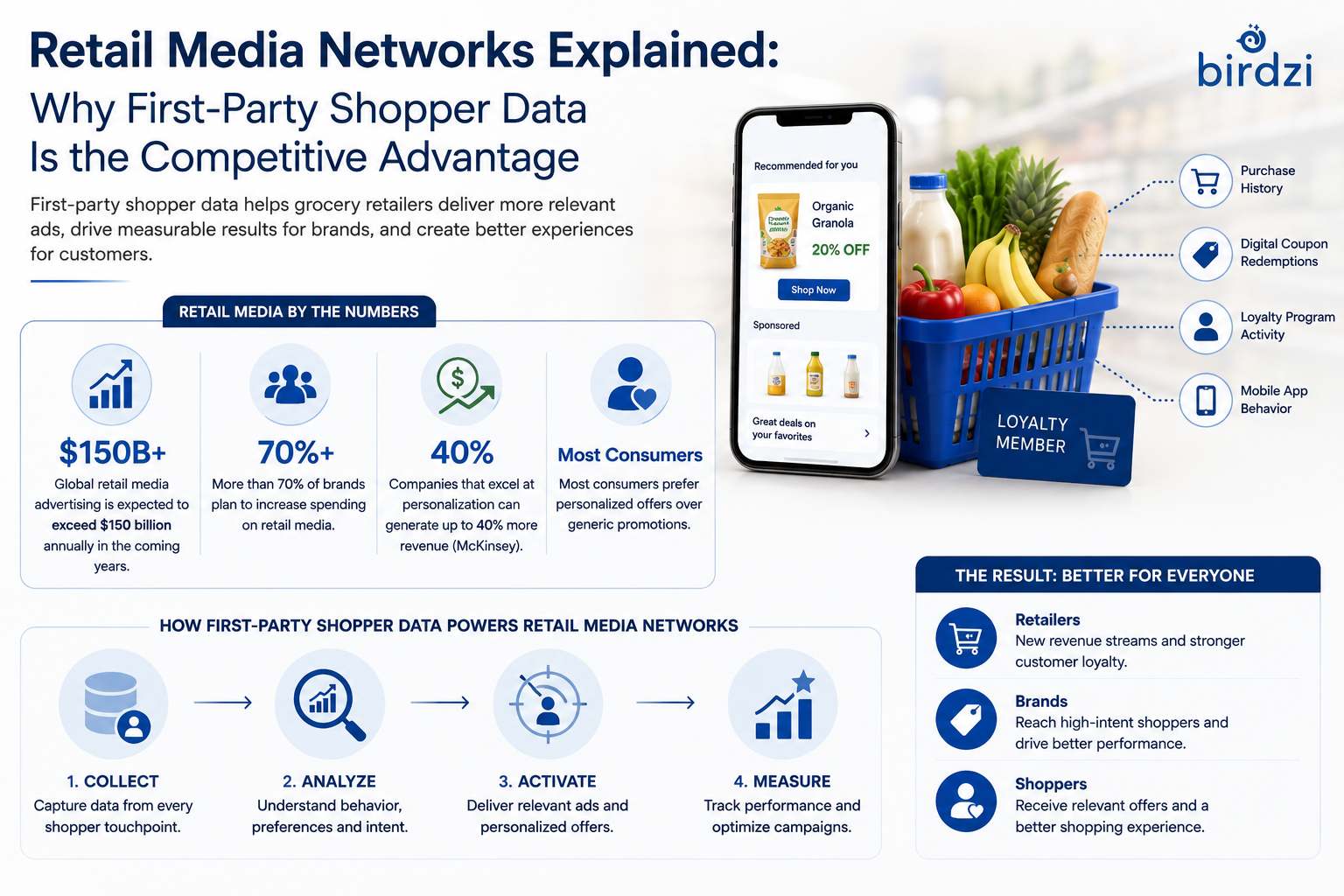
Industry research highlights why Retail Media Networks have become a strategic priority for grocery retailers and consumer brands.
| Statistic | Business Impact |
| Global retail media advertising is expected to exceed 150 billion dollars annually within the next few years. | Retail media is one of the fastest growing advertising channels worldwide. |
| More than 70 percent of brands plan to increase spending on retail media. | Brands increasingly value retailer owned advertising platforms. |
| Companies that excel at personalization can generate up to 40 percent more revenue, according to McKinsey. | First party shopper data improves marketing performance. |
| Most consumers prefer personalized offers over generic promotions. | Relevant experiences increase engagement and customer satisfaction. |
These trends show why grocery retailers are investing in customer intelligence platforms that help them collect, analyze, and activate shopper data.
What Is First Party Shopper Data?
First party shopper data is information collected directly from customers as they interact with a grocery retailer.
Unlike third party data purchased from outside providers, first party data reflects real customer behavior and is collected with customer consent.
Examples include:
- Purchase history
- Loyalty program activity
- Website browsing behavior
- Mobile app usage
- Digital coupon redemption
- Shopping frequency
- Preferred brands
- Product categories
- Average basket value
- Customer engagement with marketing campaigns
Because this information comes directly from shoppers, it provides a much more accurate understanding of customer preferences than external data sources.
Why First Party Shopper Data Is More Valuable Than Third Party Data
For many years, advertisers relied on third party cookies to reach online audiences.
Today, that strategy is becoming less effective.
Changing privacy regulations and browser updates have made first party data the most reliable source of customer intelligence.
The difference between the two approaches is significant.
| First Party Shopper Data | Third Party Data |
| Collected directly from customers | Purchased from external providers |
| Highly accurate | Accuracy varies |
| Based on real shopping behavior | Often based on estimated interests |
| Supports personalized experiences | Limited personalization |
| Builds long term customer relationships | Mainly supports advertising reach |
| Future proof against cookie changes | Becoming less reliable |
For grocery retailers, every loyalty transaction and customer interaction strengthens their competitive advantage because the quality of their customer data improves over time.
Shopper Intelligence Turns Data Into Business Growth
Collecting customer data is only the beginning. The real value comes from transforming that information into actionable insights.
Birdzi’s Shopper Analytics helps grocery retailers understand customer behavior, identify purchasing trends, and make smarter business decisions.
Instead of simply reporting sales figures, Shopper Analytics helps retailers answer important business questions such as:
- Which customers generate the highest lifetime value?
- Which shoppers are becoming less active?
- Which promotions increase repeat purchases?
- Which products are frequently purchased together?
- Which customer segments respond best to personalized campaigns?
- Which marketing investments generate the highest return?
These insights help grocery retailers improve marketing performance while giving brands access to highly targeted advertising opportunities.
Why Brands Prefer Retail Media Networks
Consumer packaged goods brands are investing heavily in Retail Media Networks because they provide something traditional advertising cannot.
They offer access to real shoppers with measurable purchasing behavior.
For example:
A coffee brand launching a new premium blend can target customers who regularly purchase gourmet coffee.
A snack manufacturer can promote healthier snack options to shoppers who frequently purchase organic products.
A dairy supplier can introduce a new product to customers with a history of purchasing similar items.
Instead of relying on assumptions, brands can reach shoppers who are already likely to be interested in their products.
This improves advertising performance while creating more relevant shopping experiences for customers.
By combining high quality first party shopper data with advanced analytics, grocery retailers create a Retail Media Network that benefits everyone. Customers receive personalized offers, brands improve advertising effectiveness, and retailers unlock new opportunities for revenue growth while strengthening customer loyalty.
Activating Retail Media With Shopper Engagement
Customer insights become far more valuable when retailers can act on them. However, turning shopper insights into successful campaigns requires more than data alone. Retailers also need strategic marketing expertise to create compelling messaging, optimize customer engagement, and maximize campaign performance. Marketing partners such as Innovar Marketing Agency can help businesses develop data-driven marketing strategies that connect with the right audiences.
Knowing what customers purchase is important, but delivering the right promotion at the right time is what creates measurable business results.
Birdzi’s Shopper Engagement Tools help grocery retailers transform customer intelligence into personalized marketing campaigns across every stage of the shopping journey.
Retailers can engage shoppers through:
- Personalized email campaigns
- Digital coupons
- Loyalty rewards
- Mobile app notifications
- Product recommendations
- Targeted promotions
- Audience segmentation
- Automated customer journeys
Rather than sending the same promotion to every customer, retailers can create campaigns based on actual shopping behavior.
For example, shoppers who regularly purchase baby products can receive promotions for diapers, baby food, and family essentials, while customers interested in premium coffee may receive offers featuring specialty blends and complementary products.
This creates more relevant shopping experiences while helping brands maximize campaign performance.
Personalization Makes Retail Media More Effective
Retail Media Networks perform best when every advertisement feels relevant to the shopper.
That level of relevance is only possible through personalization.
Birdzi’s Shopper Personalization Platform helps grocery retailers deliver individualized shopping experiences using customer intelligence and purchasing behavior.
Personalization can include:
- Product recommendations
- Personalized promotions
- Cross sell suggestions
- Seasonal campaigns
- Loyalty incentives
- Shopping reminders
- Relevant digital coupons
Instead of showing every customer identical advertisements, retailers can deliver promotions based on each shopper’s interests and purchase history.
This improves customer satisfaction while increasing campaign engagement, conversion rates, and average basket value.
A Real World Grocery Retail Example
Imagine a grocery retailer launching a Retail Media Network with support from several consumer packaged goods brands.
One shopper regularly purchases:
- Organic vegetables
- Fresh fruit
- Plant based milk
- Healthy snacks
Using first party shopper data, the retailer understands these preferences.
When a new organic yogurt brand launches a campaign, the advertisement is shown to this shopper through the retailer’s mobile app and weekly email.
At the same time:
- The shopper receives a personalized digital coupon.
- The recommended products appear on the ecommerce homepage.
- Related healthy products are suggested during checkout.
- Bonus loyalty points encourage an additional purchase.
The shopper discovers products that genuinely match their lifestyle.
The brand reaches a highly relevant audience.
The retailer increases customer engagement and advertising revenue.
This demonstrates why Retail Media Networks deliver better outcomes than traditional advertising.
Benefits for Grocery Retailers
Retail Media Networks create value beyond advertising revenue.
When powered by first party shopper data, they help retailers strengthen customer relationships while improving business performance.
Some of the biggest advantages include:
New Revenue Opportunities
Retailers can generate advertising revenue by giving brands access to premium digital advertising space across their own channels.
Better Customer Experiences
Relevant offers create a more enjoyable shopping experience than generic promotions.
Increased Customer Loyalty
Personalized engagement encourages shoppers to return more frequently and remain loyal to the retailer.
Stronger Brand Partnerships
Brands gain measurable campaign performance using accurate shopper insights, creating long term partnerships with retailers.
Smarter Marketing Decisions
Retailers can continuously optimize campaigns using customer intelligence and performance analytics.
Higher Return on Advertising Spend
Brands reach customers who are already likely to purchase their products, improving campaign efficiency and measurable results.
Why Birdzi Is Built for Grocery Retail
Many customer data platforms are designed to serve multiple industries.
Birdzi takes a different approach.
The Birdzi Customer Intelligence Platform is purpose built for grocery retailers.
Instead of offering disconnected solutions, Birdzi combines:
- Shopper Analytics
- Shopper Engagement Tools
- Shopper Personalization Platform
- Customer Intelligence
- Loyalty insights
- Marketing measurement
- Revenue optimization
into one connected platform.
This enables grocery retailers to understand customer behavior, activate personalized campaigns, measure advertising performance, and continuously improve shopper engagement using a single source of truth.
Because Birdzi is designed specifically for grocery retail, retailers can move beyond basic reporting and build Retail Media Networks that deliver measurable value for shoppers, suppliers, and their own business.
The Future of Retail Media Networks
Retail Media Networks will continue to evolve as customer expectations and technology advance.
Artificial intelligence, predictive analytics, and machine learning will make advertising even more relevant by helping retailers anticipate customer needs before shoppers begin searching.
At the same time, first party shopper data will become increasingly valuable as businesses move away from third party tracking technologies.
Retailers that invest in customer intelligence today will be better positioned to deliver personalized experiences, strengthen supplier relationships, and generate sustainable advertising revenue in the years ahead.
Conclusion
Retail Media Networks have become one of the most significant growth opportunities for grocery retailers. However, their success depends on more than advertising technology alone.
The real competitive advantage comes from high quality first party shopper data.
When retailers understand how customers shop, what they purchase, and what motivates their decisions, they can create advertising experiences that benefit everyone involved.
Birdzi helps grocery retailers achieve this by combining Shopper Analytics, Shopper Engagement Tools, and the Shopper Personalization Platform into one purpose built Customer Intelligence Platform. Retailers gain the insights needed to make better decisions, brands reach the right audiences with greater precision, and shoppers receive more relevant experiences that strengthen loyalty and increase long term value.
As Retail Media Networks continue to reshape grocery marketing, retailers that leverage first party shopper data will be best positioned to stay ahead of the competition and deliver measurable business growth.
Frequently Asked Questions
What is a Retail Media Network?
A Retail Media Network is a retailer owned advertising platform that enables brands to promote products directly to shoppers through digital channels such as ecommerce websites, mobile apps, loyalty programs, email campaigns, and personalized product recommendations.
Why is first party shopper data important?
First party shopper data comes directly from customer interactions, making it more accurate, privacy friendly, and valuable for delivering personalized marketing and measuring campaign performance.
How do Retail Media Networks benefit grocery retailers?
Retail Media Networks create new advertising revenue, strengthen supplier relationships, improve customer engagement, increase loyalty, and provide measurable marketing performance.
How does Birdzi support Retail Media Networks?
Birdzi helps grocery retailers build successful Retail Media Networks by combining Shopper Analytics, Shopper Engagement Tools, and the Shopper Personalization Platform into one Customer Intelligence Platform that transforms shopper data into actionable insights and personalized engagement.
What makes Birdzi different from a general customer data platform?
Birdzi is purpose built for grocery retailers. It combines customer intelligence, shopper analytics, personalization, engagement, and revenue measurement into one platform, helping retailers improve customer experiences while delivering measurable business results.
Sign up for Updates
Stay current on the latest happenings at Birdzi!
"*" indicates required fields
Related Posts
 " alt="AI-Powered Personalized Digital Front Pages" />
 " alt="Customer Data Platform (CDP) for Grocery Retail: Do You Really Need One?" />
 " alt="Customer Lifetime Value (CLV) in Grocery Retail: How to Measure and Increase It" />
Request a 1-on-1 Demo
There’s no substitute for seeing Birdzi’s capabilities first-hand with a seasoned expert to answer all your questions.
"*" indicates required fields