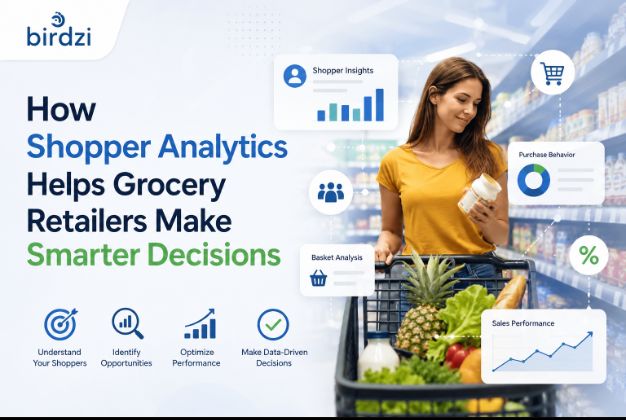
Grocery retailers have access to more customer data than ever before. Loyalty programs, point of sale systems, ecommerce platforms, digital interactions, and promotional activity all generate valuable information. The challenge is no longer collecting data. The real challenge is turning that information into decisions that improve customer relationships and business performance.
The Birdzi Shopper Analytics platform helps retailers turn shopper data into actionable intelligence. By bringing customer behavior and purchasing insights together, retailers can better understand their shoppers, identify opportunities, and make more informed decisions.
Why Shopper Analytics Matters in Grocery Retail
Shopper behavior is constantly changing. Customers change where they shop, what they purchase, how frequently they visit, and how they respond to promotions. Looking only at historical sales reports may show what happened, but it does not always explain why it happened or what retailers should do next.
Shopper analytics provides a deeper understanding of customer behavior. Retailers can analyze purchasing patterns, customer value, engagement, and changes in shopping activity to make more informed decisions across marketing, loyalty, merchandising, and promotions.
Turning Customer Data Into Actionable Insights
Customer data becomes more valuable when retailers can connect information from different sources. Loyalty activity, transaction data, ecommerce behavior, and digital engagement can provide different views of the same shopper.
When these insights are analyzed together, retailers can develop a clearer understanding of customer behavior and identify meaningful patterns.
Understanding Changing Shopper Behavior
Retailers can use behavioral data to identify changes in shopping frequency, purchasing habits, product preferences, and engagement. These changes may reveal opportunities to increase customer value or risks that could affect retention.
For example, a customer who previously shopped frequently but has recently reduced their visits may require a different strategy from a highly engaged customer who continues to purchase regularly.
Identifying Valuable Customer Segments
Analytics can also help retailers understand the differences between shopper groups. Instead of treating every loyalty customer in the same way, retailers can analyze customers according to purchasing behavior, value, engagement, and lifecycle stage.
This creates more useful segments that can support better marketing and customer engagement decisions.
Improving Promotional Decisions With Shopper Insights
Promotions are an important part of grocery retail, but broad promotional strategies can result in unnecessary spending. Not every customer responds to the same product, discount, or message.
Shopper analytics can help retailers understand how different customer groups respond to promotional activity.
By analyzing purchasing behavior alongside promotional performance, retailers can identify which strategies are influencing customer behavior and where promotional investment may be better allocated.
Connecting Analytics With Customer Engagement
Analytics becomes more valuable when retailers can use insights to create relevant customer experiences.
Understanding what shoppers purchase, how frequently they visit, and how their behavior changes can help retailers determine which messages and offers are likely to be most relevant.
This is where Birdzi’s Shopper Engagement Tools can help retailers turn shopper insights into targeted engagement across digital channels.
Instead of sending identical messages to every loyalty customer, retailers can use shopper data to develop more relevant communications based on individual behaviors and preferences.
Measuring What Drives Revenue
Identifying customer patterns is only one part of the process. Retailers also need to understand whether their marketing and engagement strategies are producing measurable results.
Connecting Marketing Activity With Business Outcomes
Useful performance indicators can include customer retention, shopping frequency, basket size, offer redemption, customer segment movement, and incremental revenue.
Connecting these outcomes with shopper behavior provides retailers with a clearer understanding of which strategies are generating results.
Moving Beyond Basic Marketing Metrics
Metrics such as impressions, clicks, and email opens can provide useful information, but they do not always show the full business impact of a campaign.
Retailers can gain deeper insight by connecting marketing activity with actual purchasing behavior and revenue outcomes.
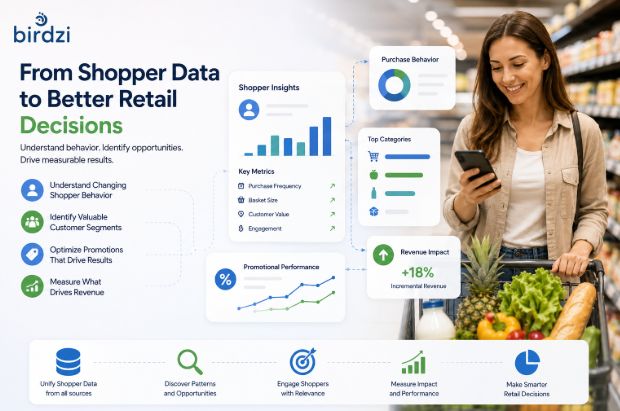
From Shopper Data to Better Retail Decisions
The value of shopper analytics is not simply in collecting more data. Its value comes from helping retailers understand what the data means and determining what action should follow.
The Birdzi Shopper Analytics platform helps retailers move from fragmented customer information toward actionable shopper intelligence. By understanding behavioral patterns, identifying opportunities, and measuring outcomes, retailers can make decisions based on a clearer view of their customers.
For retailers looking to connect shopper intelligence with individualized customer experiences, Birdzi’s Shopper Personalization Platform provides another way to translate customer insights into more relevant experiences and measurable outcomes.
Building a More Data Driven Grocery Strategy
Modern grocery retail requires more than simply knowing what products customers purchase. Retailers need to understand why customers behave differently, how their behavior changes over time, and which strategies can influence future activity.
A strong shopper analytics strategy gives retailers the foundation to answer these questions.
By combining customer data, behavioral insights, segmentation, engagement, and performance measurement, retailers can create a more connected approach to customer growth.
The result is a shift from simply reporting what happened to understanding what is happening, why it matters, and what retailers can do next.
FAQs
Q1. How can shopper analytics improve grocery retail performance?
A: Shopper analytics helps retailers identify behavioral trends, evaluate customer segments, optimize promotional strategies, and connect shopper activity with measurable commercial outcomes.
Q2. What shopper behaviors should grocery retailers analyze?
A: Retailers can analyze purchase frequency, basket composition, category preferences, customer value, promotional response, engagement patterns, and changes in shopping behavior over time.
Q3. How can shopper analytics support more effective promotions?
A: By analyzing customer behavior and promotional responses, retailers can identify which offers influence purchasing decisions and determine where targeted promotions can deliver stronger results.
Q4. How does shopper analytics support customer retention?
A: Behavioral insights can help retailers identify changes in shopping frequency and engagement, allowing teams to recognize potential retention risks and develop more relevant strategies for different customer segments.
Q5. How can retailers measure the revenue impact of shopper analytics?
A: Retailers can connect shopper insights with metrics such as incremental revenue, basket value, shopping frequency, retention, offer redemption, and customer lifetime value to evaluate commercial impact.
Sign up for Updates
Stay current on the latest happenings at Birdzi!
"*" indicates required fields
Related Posts
 " alt="How Personalized Offers Drive Growth for Grocery Retailers" />
 " alt="Improving Grocery Shopper Engagement With Better Data" />
 " alt="Omnichannel Grocery Marketing: How to Create Consistent Shopper Experiences Across Every Touchpoint" />
Request a 1-on-1 Demo
There’s no substitute for seeing Birdzi’s capabilities first-hand with a seasoned expert to answer all your questions.
"*" indicates required fields