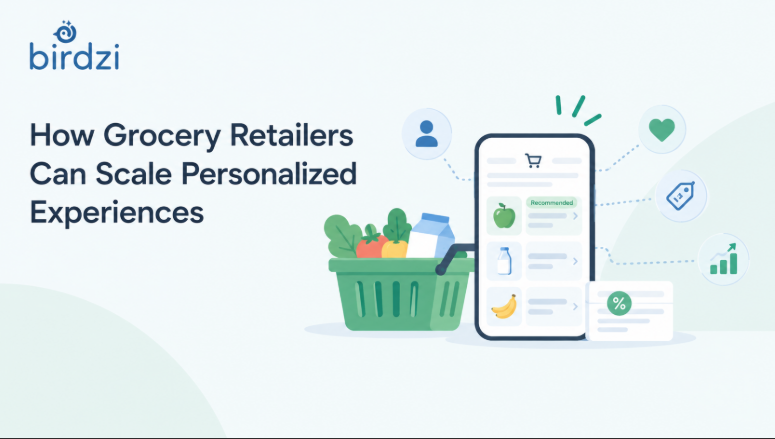
Grocery shoppers have different preferences, purchasing habits, and reasons for choosing one product over another. As digital shopping and loyalty programs continue to generate more customer information, retailers have an opportunity to make these experiences more relevant.
However, personalization becomes more challenging as a retailer’s customer base grows. What works for a few customer segments may not be practical when managing thousands or millions of shoppers. Retailers need a way to use shopper insights efficiently while keeping the experience relevant and useful.
Why Personalization Matters in Grocery Retail
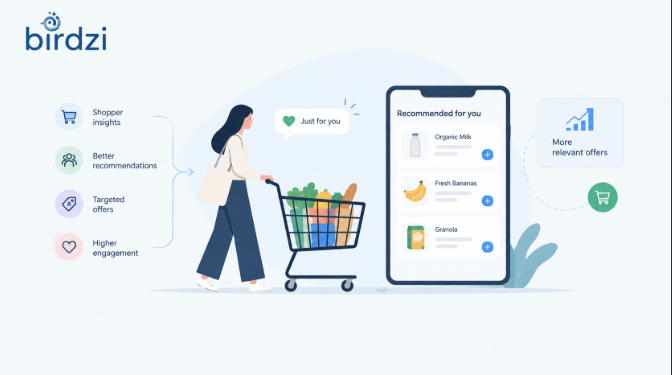
A generic offer may appeal to some shoppers but have little value for others. One customer may regularly purchase organic products, while another may be more interested in discounts, household essentials, or specific brands. Birdzi helps retailers understand these differences and create more relevant shopping experiences based on individual customer needs.
Personalization allows retailers to respond to these differences instead of treating every shopper the same.
A well-planned personalization strategy can help retailers:
- Deliver more relevant product recommendations
- Create targeted offers and promotions
- Support product discovery
- Improve shopper engagement
- Identify cross-selling opportunities
- Build stronger customer relationships
The goal is not simply to provide more personalized messages. It is to make the shopping experience more useful for each customer.
Use Shopper Data to Understand Customer Needs
Effective personalization starts with understanding shopper behavior. Transaction history can provide valuable information about what customers buy, how frequently they shop, which categories they prefer, and how their baskets change over time.
Retailers can also consider signals such as:
- Purchase frequency
- Product preferences
- Basket composition
- Category interests
- Promotional engagement
- Customer segments
Looking at these signals together gives retailers a broader view of shopper behavior.
For example, a customer who frequently buys coffee may also be interested in filters, creamer, or related products. Recognizing these patterns can help retailers identify opportunities to make recommendations more relevant.
This is where Birdzi’s shopper analytics platform can support retailers by turning shopper data into actionable insights.
Create More Relevant Product Recommendations
Once retailers understand shopper behavior, they can use those insights to improve product recommendations.
Rather than showing the same products to every customer, retailers can recommend items based on previous purchases, category interests, and purchasing patterns.
For example, someone who regularly buys pasta could receive recommendations for sauces, seasonings, or other complementary products. A shopper who frequently purchases from a particular category may also be more interested in discovering new products within that category.
Relevant recommendations can make product discovery easier while creating additional opportunities for retailers to increase engagement and basket value.
Personalize Offers for Different Shopper Groups
Personalization can also make promotional activity more relevant.
Instead of sending the same offer to an entire customer base, retailers can use shopper insights to understand which types of promotions may be more valuable to different audiences.
Price-sensitive shoppers may respond well to savings-focused promotions, while frequent shoppers could be interested in complementary products or new items related to their usual purchases.
This approach can help retailers make better use of promotional activity while giving shoppers offers that are more closely aligned with their interests.
Timing also matters. A relevant offer can have a greater impact when it reaches a shopper at a point when they are more likely to consider the product.
Connect Personalization Across the Customer Journey
Personalization should not be limited to a single campaign or communication channel. Retailers can connect shopper insights with loyalty programs, digital experiences, targeted promotions, and customer communications.
This creates a more consistent experience across different touchpoints.
For example, insights from purchasing behavior can inform the types of products promoted to a shopper, while engagement data can help retailers understand which messages or offers are generating interest.
Birdzi’s shopper engagement tools help retailers turn customer insights into targeted engagement and personalized interactions.
Use Technology to Scale Personalization
Personalizing experiences manually becomes increasingly difficult as a retailer’s customer base grows. Technology can help retailers analyze larger amounts of shopper information, identify useful patterns, and activate insights across customer groups.
Scalable personalization also requires flexibility. Shopper preferences can change over time, so retailers need to continually evaluate customer behavior rather than relying on outdated assumptions.
A flexible approach allows retailers to adapt recommendations, offers, and engagement strategies as new shopper insights become available.
Measure the Impact of Personalization
Personalization should be measured against clear customer and business outcomes. Tracking performance helps retailers understand which strategies are delivering value and where improvements may be needed.
Useful metrics can include:
- Recommendation engagement
- Conversion rates
- Average basket value
- Repeat purchases
- Cross-category purchases
- Customer retention
- Incremental revenue
Retailers can also test different recommendations, offers, and shopper segments to determine what performs best.
Continuous measurement helps turn personalization from a one-time marketing initiative into an ongoing strategy that can improve over time.
Build More Relevant Grocery Experiences
Scaling personalization is about more than using customer data to target shoppers. Retailers need to turn that data into useful insights and then apply those insights in ways that improve the customer experience.
Birdzi’s shopper personalization platform helps retailers connect shopper insights with personalized experiences while supporting measurable business outcomes.
By combining shopper data, analytics, recommendations, targeted offers, and engagement, grocery retailers can create experiences that feel more relevant without making the shopping journey unnecessarily complicated.
Frequently Asked Questions
Q. How can grocery retailers scale customer experiences?
Retailers can scale tailored experiences by combining shopper data, segmentation, analytics, automation, and engagement tools across larger customer groups.
Q. What data can retailers use to understand shoppers?
Useful data can include purchase history, product preferences, basket composition, shopping frequency, category interests, and responses to previous promotions.
Q. Can tailored recommendations improve product discovery?
Yes. Relevant recommendations can introduce shoppers to complementary products, new items, or products that align with their existing purchasing behavior.
Q. Why is personalization important for grocery retailers?
It helps retailers create more relevant experiences by responding to differences in shopper preferences, purchasing habits, and interests.
Q. How should retailers measure these strategies?
Retailers can track engagement, conversions, basket value, repeat purchases, retention, cross-category purchases, and incremental revenue to evaluate performance.
Sign up for Updates
Stay current on the latest happenings at Birdzi!
"*" indicates required fields
Related Posts
 " alt="How Grocers Can Make Promotions More Relevant to Shoppers" />
 " alt="How Grocery Retailers Can Adapt Marketing to Changing Shopper Behavior" />
 " alt="What Should Grocers Look for in Customer Engagement Technology?" />
Request a 1-on-1 Demo
There’s no substitute for seeing Birdzi’s capabilities first-hand with a seasoned expert to answer all your questions.
"*" indicates required fields