Grocery retailers have more ways to connect with shoppers than ever before. Loyalty programs, digital promotions, mobile experiences, and customer communications can all create opportunities to engage shoppers. But managing these touchpoints effectively becomes harder as customer bases and marketing channels grow.
The right technology can help grocers bring shopper information and engagement strategies together. Instead of relying on disconnected campaigns, retailers can use customer insights to create more relevant interactions and understand what is actually driving results.
Why Customer Engagement Technology Matters
Customer engagement is not simply about sending more messages or promotions. Shoppers are more likely to respond when the content, products, and offers they see are relevant to their needs.
Engagement technology can help retailers use available customer information to create more targeted experiences. It can also reduce the manual effort involved in managing campaigns across different shopper groups.
A useful solution should help retailers:
- Understand shopper behavior
- Identify valuable customer segments
- Deliver relevant offers and content
- Connect insights with customer interactions
- Support engagement across multiple channels
- Measure the results of marketing activity
The focus should remain on creating useful experiences rather than increasing the number of communications shoppers receive.
Start With Actionable Shopper Insights
Technology is most useful when it helps retailers turn customer information into decisions.
Purchase history, basket composition, shopping frequency, category preferences, and promotional responses can provide valuable context about individual shoppers and customer groups.
For example, a retailer may discover that customers who regularly purchase products from one category also tend to purchase complementary items. These insights can inform recommendations, promotions, and other engagement strategies.
Retailers looking for customer engagement technology should therefore consider how well a platform can turn shopper information into actionable insights.
A solution such as Birdzi’s shopper analytics platform can help retailers analyze shopper behavior and identify patterns that can support better engagement decisions.
Look for Flexible Audience Targeting
Different shoppers have different needs, so retailers should be able to create audiences based on meaningful behaviors and characteristics.
A frequent shopper may need different messaging from someone who shops occasionally. Similarly, a customer who regularly purchases from a particular category may be more interested in related products than a shopper with different purchasing habits.
Flexible audience targeting allows retailers to create more relevant campaigns without treating their entire customer base as one audience.
The technology should make it practical to adjust audiences as shopper behavior changes rather than requiring retailers to rebuild their strategy every time.
Connect Insights With Relevant Experiences
Collecting customer information is only valuable when retailers can put it into action.
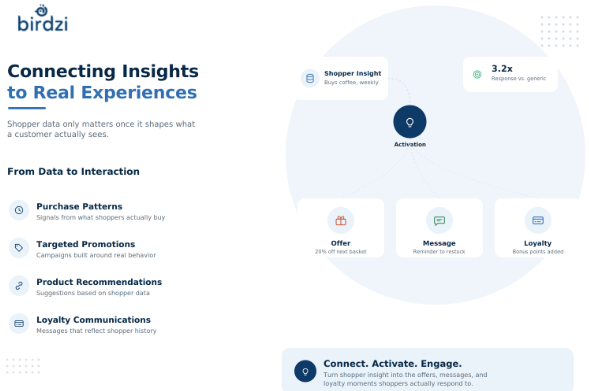
Engagement technology should help connect shopper insights with the experiences customers actually receive. This could include targeted promotions, product recommendations, loyalty communications, or other digital interactions.
For example, a retailer could use purchasing patterns to identify shoppers who may be interested in a particular category and then create an appropriate campaign for that audience.
This connection between insight and activation helps retailers move from simply understanding shoppers to responding to their needs.
Consider Cross-Channel Engagement
Shoppers may interact with a grocery retailer through several channels during their relationship with the brand. A customer might use a loyalty program, interact with digital promotions, receive communications, and shop both online and in-store.
Customer engagement technology should support a consistent strategy across these touchpoints.
Retailers should consider whether a platform can help coordinate customer communications and engagement activities instead of requiring separate processes for every channel.
Birdzi’s shopper engagement tools are designed to help retailers activate customer insights through targeted engagement and personalized interactions.
A connected approach can make it easier for retailers to deliver relevant experiences while maintaining a clearer view of customer engagement.
Make Personalization Practical at Scale
Personalized experiences can be valuable, but managing them manually across a large customer base is difficult.
Technology should make it easier to apply shopper insights across larger audiences while still accounting for differences in customer behavior.
Automation can help retailers manage recurring engagement activities, audience updates, and targeted experiences more efficiently. This allows marketing teams to spend less time handling repetitive tasks and more time improving their overall strategy.
Scalability is particularly important for retailers with large loyalty databases or multiple customer segments.
Check How Well the Technology Measures Results
Engagement technology should not only help retailers launch campaigns. It should also help them understand what those campaigns achieve.
Before choosing a solution, retailers should consider what performance information it provides and whether that information can support meaningful business decisions.
Relevant metrics may include:
- Campaign engagement
- Conversion rates
- Repeat purchases
- Average basket value
- Customer retention
- Cross-category purchases
- Incremental revenue
Being able to connect engagement activity with measurable outcomes can help retailers determine which strategies are worth continuing and where changes may be needed.
Choose a Platform That Can Evolve
Shopper expectations and retail strategies continue to change. The technology a retailer chooses should be flexible enough to support new approaches as customer behavior evolves.
A modular platform can give retailers the ability to use different capabilities as their needs develop. Rather than replacing an entire system when priorities change, retailers can expand their approach as new opportunities emerge.
This flexibility can be especially valuable for grocers that want to connect shopper analytics, engagement, and revenue measurement within a broader strategy.
Turn Customer Insights Into Better Engagement
Choosing customer engagement technology is ultimately about finding a solution that connects shopper understanding with meaningful action.
Retailers should look beyond the number of features a platform offers and consider whether it can help them understand customers, target relevant audiences, activate insights, work across engagement channels, and measure results.
Birdzi’s shopper personalization platform helps retailers connect shopper insights with tailored experiences and understand what is contributing to revenue.
With the right technology in place, grocers can build a more connected approach to customer engagement while making better use of the shopper data they already have.
Frequently Asked Questions
Q. What is customer engagement technology in grocery retail?
It refers to technology that helps grocery retailers understand shoppers, manage targeted interactions, deliver relevant experiences, and measure engagement results.
Q. What should grocers consider when choosing engagement technology?
Retailers should consider audience targeting, data integration, automation, cross-channel capabilities, scalability, reporting, and how easily the platform can adapt to changing needs.
Q. How can engagement technology use shopper data?
It can use information such as purchasing behavior, category interests, shopping frequency, and promotional responses to support more relevant customer interactions.
Q. Can engagement technology support loyalty programs?
Yes. Retailers can connect shopper insights with loyalty activity to create more relevant communications, offers, and experiences for different customer groups.
Q. How can grocers measure customer engagement?
Retailers can monitor metrics such as engagement, conversions, repeat purchases, basket value, retention, and incremental revenue to evaluate performance.
Sign up for Updates
Stay current on the latest happenings at Birdzi!
"*" indicates required fields
Related Posts
 " alt="How Grocers Can Make Promotions More Relevant to Shoppers" />
 " alt="How Grocery Retailers Can Adapt Marketing to Changing Shopper Behavior" />
 " alt="How Grocery Retailers Can Scale Personalized Experiences" />
Request a 1-on-1 Demo
There’s no substitute for seeing Birdzi’s capabilities first-hand with a seasoned expert to answer all your questions.
"*" indicates required fields