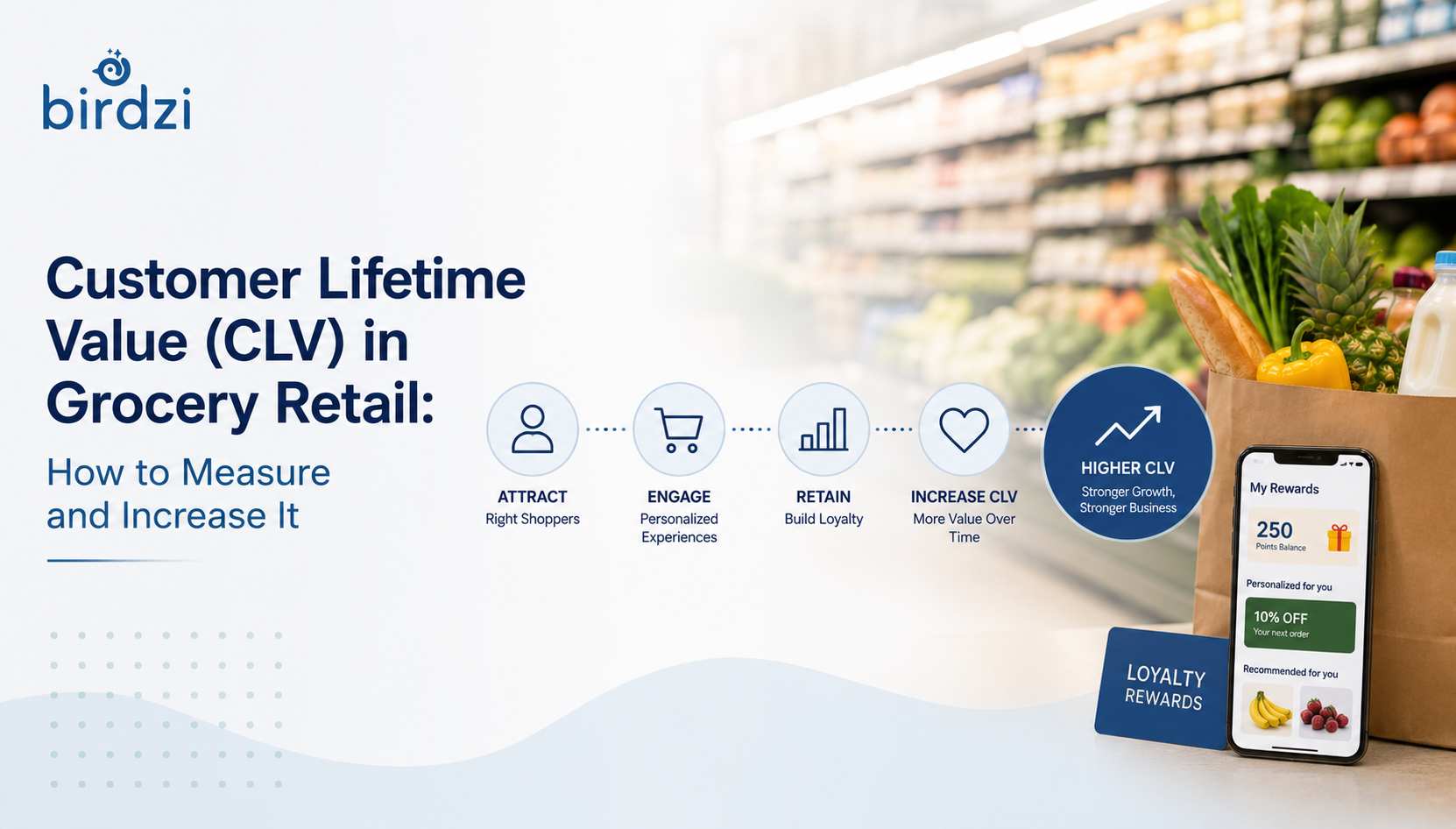
Every grocery retailer wants to attract new shoppers, but long term success depends on keeping existing customers engaged. While acquiring new customers is important, retaining loyal shoppers often delivers a much greater return on investment. This is why Customer Lifetime Value (CLV) has become one of the most important metrics in grocery retail.
Customer Lifetime Value helps retailers understand how much revenue a customer is expected to generate throughout their relationship with the business. Instead of focusing only on individual transactions, CLV measures the long term value of every shopper.
For grocery retailers, this insight changes the way marketing, loyalty programs, and customer engagement strategies are planned. By understanding which shoppers bring the greatest long term value, retailers can invest in personalized experiences that increase loyalty, improve retention, and drive sustainable revenue growth.
What Is Customer Lifetime Value?
Customer Lifetime Value, commonly referred to as CLV, is the estimated total revenue a customer generates during their entire relationship with a retailer.
Unlike a single purchase or monthly sales report, CLV considers how often customers shop, how much they spend, and how long they continue purchasing from the retailer.
For example, two shoppers may each spend one hundred dollars today. However, if one customer shops every week for several years while the other never returns, their lifetime values are dramatically different.
Understanding this difference helps grocery retailers make smarter marketing decisions and prioritize long term customer relationships over short term sales.
Why Customer Lifetime Value Matters in Grocery Retail
Grocery retail is built on repeat purchases. Customers buy everyday essentials, fresh produce, household products, and seasonal items throughout the year. This creates many opportunities to strengthen relationships and increase customer value over time.
Rather than measuring success by daily transactions alone, retailers that focus on CLV can answer important business questions such as:
- Which customers are most valuable?
- Which shoppers are at risk of leaving?
- Which loyalty programs encourage repeat purchases?
- Which marketing campaigns generate long term revenue?
- Which customer segments deserve additional investment?
By answering these questions, retailers can improve customer retention while maximizing the return on every marketing dollar.
Customer Lifetime Value by the Numbers
Research consistently shows that retaining customers is more profitable than constantly acquiring new ones.
| Industry Insight | Why It Matters |
| Increasing customer retention by just 5 percent can increase profits by 25 to 95 percent according to Bain and Company. | Small improvements in loyalty can create significant business growth. |
| Existing customers are significantly more likely to purchase than new customers. | Retention often delivers a higher return than acquisition. |
| Personalized customer experiences can increase revenue by up to 40 percent, according to McKinsey. | Relevant engagement strengthens long term customer relationships. |
| Loyal customers typically spend more over time than first time shoppers. | Building long term relationships increases Customer Lifetime Value. |
These statistics highlight why grocery retailers are placing greater emphasis on customer intelligence and personalized engagement strategies.
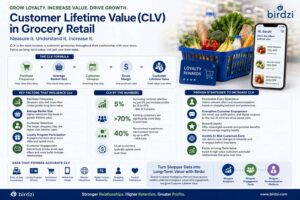
What Factors Influence Customer Lifetime Value?
Customer Lifetime Value is not determined by one purchase. It is influenced by several behaviors that reflect the strength of the customer relationship.
Some of the most important factors include:
Purchase Frequency
Customers who visit the store every week naturally generate more long term value than shoppers who only make occasional purchases.
Average Basket Size
Shoppers who consistently purchase more items or spend more per visit contribute more revenue throughout their relationship with the retailer.
Customer Retention
The longer a shopper continues purchasing from the same grocery retailer, the greater their lifetime value becomes.
Loyalty Program Participation
Customers who actively participate in loyalty programs often visit more frequently and engage with personalized promotions.
Customer Engagement
Interactions with email campaigns, digital coupons, mobile apps, and personalized offers all contribute to stronger customer relationships.
Measuring Customer Lifetime Value Requires Connected Data
Accurately measuring CLV requires more than sales reports.
Retailers need a complete understanding of customer behavior across every touchpoint, including:
- Point of sale transactions
- Loyalty program activity
- Ecommerce purchases
- Mobile app usage
- Website interactions
- Digital coupon redemption
- Shopping frequency
- Product preferences
When this information is connected, retailers gain a much clearer picture of customer value and purchasing patterns.
This is where Birdzi’s Shopper Analytics provides significant value.
Birdzi helps grocery retailers transform customer data into actionable insights that support smarter decision making and long term growth.
Instead of relying on basic sales reports, retailers can identify their highest value customers, recognize changes in shopping behavior, and discover opportunities to strengthen loyalty before valuable customers disengage.
Why Shopper Analytics Is the Foundation of Higher CLV
Improving Customer Lifetime Value starts with understanding customers at a deeper level.
Birdzi’s Shopper Analytics helps grocery retailers identify trends that traditional reporting often misses.
For example, retailers can discover:
- Which customer segments generate the highest lifetime value
- Which shoppers are becoming less active
- Which promotions encourage repeat purchases
- Which product categories increase loyalty
- Which customer groups respond best to personalized marketing
These insights enable retailers to make informed decisions that improve customer retention and increase long term revenue rather than focusing only on short term sales.
Strategies to Increase Customer Lifetime Value
Understanding Customer Lifetime Value is only the first step. The real opportunity comes from increasing it through smarter customer engagement, personalized experiences, and data driven decision making.
Rather than treating every shopper the same, successful grocery retailers focus on building stronger relationships with their most valuable customers while encouraging occasional shoppers to visit more frequently.
Here are some of the most effective ways to increase Customer Lifetime Value.
Personalize Every Customer Experience
Modern shoppers expect retailers to understand their preferences.
Instead of sending identical promotions to every customer, retailers should tailor offers based on shopping habits, purchase history, and product preferences.
Personalized experiences can include:
- Product recommendations
- Weekly offers based on previous purchases
- Personalized digital coupons
- Birthday rewards
- Seasonal promotions
- Loyalty incentives
- Shopping reminders
When shoppers receive offers that genuinely match their interests, they are more likely to return and spend more during each visit.
Strengthen Customer Engagement
Regular communication helps retailers remain top of mind between shopping trips. However, increasing Customer Lifetime Value requires more than customer data alone. Retailers also need effective marketing strategies that turn insights into meaningful campaigns and long-term customer relationships. Partners such as Innovar Marketing Agency can help businesses develop data-driven marketing initiatives that improve engagement and retention.
Birdzi’s Shopper Engagement Tools help grocery retailers turn customer insights into personalized marketing campaigns across multiple channels.
Retailers can engage shoppers through:
- Email campaigns
- Mobile notifications
- Digital coupons
- Loyalty rewards
- Personalized promotions
- Customer segments
- Automated marketing journeys
Because these campaigns are based on real shopper behavior, they are significantly more relevant than generic promotions.
For example, a customer who regularly purchases fresh seafood may receive offers before holiday weekends, while another shopper who frequently buys baby products receives promotions for diapers and family essentials.
This type of targeted engagement strengthens customer relationships while increasing repeat purchases.
Deliver Personalized Shopping Experiences
Personalization has become one of the biggest drivers of Customer Lifetime Value.
Birdzi’s Shopper Personalization Platform helps grocery retailers create individualized experiences that improve both customer satisfaction and business performance.
Retailers can personalize:
- Product recommendations
- Promotional offers
- Cross sell opportunities
- Loyalty rewards
- Digital content
- Shopping experiences
- Customer journeys
Instead of presenting every customer with the same products, retailers can highlight items that align with previous purchases and current shopping habits.
The result is a shopping experience that feels helpful rather than promotional.
Reward Customer Loyalty
Loyalty programs remain one of the most effective ways to increase Customer Lifetime Value.
However, successful loyalty programs do more than award points.
The best programs provide meaningful value through:
- Personalized rewards
- Exclusive member offers
- Early access to promotions
- Bonus points for preferred products
- Special seasonal campaigns
When loyalty programs are powered by customer intelligence, retailers can encourage repeat visits while making customers feel recognized and appreciated.
Identify At Risk Customers Early
One of the biggest advantages of customer intelligence is the ability to recognize changes in shopper behavior before customers stop shopping altogether.
For example, retailers can identify shoppers who:
- Visit less frequently
- Spend less than usual
- Stop engaging with promotions
- Reduce loyalty activity
Instead of waiting until these customers leave, retailers can proactively re engage them with personalized offers and targeted campaigns.
Retaining an existing customer is often far more cost effective than acquiring a new one.
A Real World Example
Imagine two grocery shoppers.
Emily shops every week, purchases fresh produce, dairy products, and household essentials, and regularly uses the retailer’s loyalty app.
David shops only once every few months and rarely interacts with marketing campaigns.
Traditional sales reports simply record their purchases.
Customer Lifetime Value analysis tells a much deeper story.
Birdzi identifies Emily as a high value customer with strong long term potential.
The retailer responds by:
- Delivering personalized weekly offers
- Recommending complementary products
- Providing bonus loyalty rewards
- Sending reminders before her usual shopping day
Over time, Emily continues shopping regularly, increases her average basket size, and becomes a loyal customer.
This is how Customer Lifetime Value grows through data driven engagement rather than chance.
Why Birdzi Helps Grocery Retailers Increase Customer Lifetime Value
Improving Customer Lifetime Value requires more than isolated marketing tools.
Retailers need a connected platform that combines customer intelligence, analytics, engagement, and personalization.
Birdzi’s Customer Intelligence Platform brings together:
- Shopper Analytics
- Shopper Engagement Tools
- Shopper Personalization Platform
- Customer intelligence
- Loyalty insights
- Marketing performance measurement
Instead of working with disconnected systems, grocery retailers gain a unified understanding of every shopper, making it easier to deliver personalized experiences that strengthen loyalty and increase long term revenue.
Because Birdzi is purpose built for grocery retail, every insight is designed to help retailers improve customer relationships while demonstrating measurable business outcomes.
The Future of Customer Lifetime Value
Customer expectations continue to rise.
Shoppers increasingly expect retailers to recognize their preferences, anticipate their needs, and provide relevant experiences across every shopping channel.
Artificial intelligence, predictive analytics, and automation will continue to improve how retailers identify valuable customers and personalize engagement.
However, technology alone is not enough.
Retailers that combine advanced customer intelligence with thoughtful, customer focused experiences will be best positioned to increase Customer Lifetime Value and build lasting loyalty.
Conclusion
Customer Lifetime Value is one of the most valuable metrics in grocery retail because it shifts the focus from short term transactions to long term customer relationships.
By understanding how customers shop, what motivates their purchases, and how their behavior changes over time, retailers can make smarter decisions that improve loyalty, increase retention, and drive sustainable revenue growth.
Birdzi helps grocery retailers achieve these outcomes through its purpose built Customer Intelligence Platform, combining Shopper Analytics, Shopper Engagement Tools, and the Shopper Personalization Platform into one connected solution. With deeper shopper insights and personalized engagement, retailers can strengthen every customer relationship while increasing Customer Lifetime Value and maximizing marketing performance.
Frequently Asked Questions
What is Customer Lifetime Value in grocery retail?
Customer Lifetime Value is the estimated total revenue a customer generates throughout their relationship with a grocery retailer. It helps businesses understand the long term value of each shopper rather than focusing only on individual purchases.
Why is Customer Lifetime Value important?
Customer Lifetime Value helps retailers identify their most valuable customers, improve retention, optimize marketing investments, and increase long term profitability through stronger customer relationships.
How can grocery retailers increase Customer Lifetime Value?
Retailers can increase Customer Lifetime Value by personalizing customer experiences, strengthening loyalty programs, delivering relevant promotions, improving customer engagement, and using shopper analytics to identify opportunities for growth.
How does Birdzi help improve Customer Lifetime Value?
Birdzi combines Shopper Analytics, Shopper Engagement Tools, and the Shopper Personalization Platform to help grocery retailers understand shopper behavior, personalize engagement, increase customer loyalty, and improve long term business performance.
What data is used to calculate Customer Lifetime Value?
Customer Lifetime Value is typically calculated using purchase history, shopping frequency, average basket value, loyalty program activity, customer retention, digital engagement, and other first party shopper data collected across multiple retail channels.
Sign up for Updates
Stay current on the latest happenings at Birdzi!
"*" indicates required fields
Related Posts
 " alt="Improving Grocery Shopper Engagement With Better Data" />
 " alt="Omnichannel Grocery Marketing: How to Create Consistent Shopper Experiences Across Every Touchpoint" />
 " alt="Advanced Shopper Analytics for Smarter Grocery Retail Decisions" />
Request a 1-on-1 Demo
There’s no substitute for seeing Birdzi’s capabilities first-hand with a seasoned expert to answer all your questions.
"*" indicates required fields