Customers don’t all bring the same value to a business. Two shoppers might spend a similar amount in one visit, but one could return multiple times a month while the other shops only once in a while.
For grocery retailers, shopping frequency provides an important view of customer value. When analyzed alongside purchase behavior, basket size, engagement, and retention, it can help retailers identify valuable customers, recognize changes in behavior, and develop more targeted strategies.
The real opportunity is not simply knowing how often customers shop. It is understanding what their shopping frequency means for their overall value.
Why Shopping Frequency Matters for Customer Value
Shopping frequency measures how often a customer purchases from a retailer over a specific period. On its own, it is a straightforward metric. When combined with other customer data, however, it can reveal much more about shopper behavior.
A customer who shops frequently may represent a strong opportunity for retention and cross-selling. Conversely, a customer whose visits are becoming less frequent could be showing early signs of disengagement.
This makes shopping frequency useful for moving beyond basic sales reporting toward a more complete understanding of customer value.
Retailers can evaluate shopping frequency alongside metrics such as:
- Average basket value
- Purchase categories
- Promotional response
- Customer retention
- Digital engagement
- Purchase recency
- Changes in purchasing behavior
Together, these signals provide a stronger foundation for understanding and measuring customer value.
How Shopping Frequency Reveals Different Customer Segments
Not all frequent shoppers are necessarily high-value customers, and not every occasional shopper should be considered low-value.
For example, one shopper may visit frequently but make relatively small purchases, while another may visit less often but generate significantly larger baskets.
This is why shopping frequency should be considered as part of a broader customer segmentation strategy.
Retailers can identify groups such as:
High-Frequency, High-Value Customers
These customers shop regularly and contribute significant revenue. Retaining them should be a priority because losing an established high-value shopper can have a meaningful impact on revenue.
High-Frequency, Lower-Value Customers
These shoppers already demonstrate strong engagement through frequent visits. Retailers may have opportunities to increase their basket size through relevant recommendations, complementary products, or personalized offers.
Low-Frequency, High-Value Customers
These shoppers may make larger purchases but visit less often. Understanding what drives their purchasing patterns can help retailers identify opportunities to encourage additional visits.
Declining-Frequency Customers
A reduction in shopping frequency can be an important behavioral signal. If a previously active customer begins visiting less often, retailers may have an opportunity to re-engage them before they become inactive.
Turn Shopping Data Into Actionable Customer Insights
The value of shopping-frequency data comes from what retailers do with it.
Instead of treating frequency as a static customer attribute, retailers can monitor how it changes over time. A shopper moving from weekly purchases to occasional visits may require a different strategy from someone who has maintained consistent shopping habits.
This is where shopper analytics can help retailers connect transaction and behavioral data to actionable insights. Birdzi’s Shopper Analytics platform helps retailers transform customer data into actionable intelligence, identify opportunities, and make more informed decisions.
The objective is to answer practical questions:
- Which customers are increasing their shopping frequency?
- Which valuable customers are becoming less active?
- Which shoppers have the potential to increase their visit frequency?
- Which products or promotions influence repeat purchases?
- Which customer segments are generating the greatest value?
These insights can help marketing, loyalty, and merchandising teams make more informed decisions.
Use Frequency Data to Improve Personalization
Once retailers understand differences in customer behavior, they can make their marketing more relevant.
A frequent shopper may not need the same incentive as a customer who has not visited recently. Similarly, a high-value customer may respond differently to an offer than a shopper who makes smaller, less frequent purchases.
Personalization allows retailers to align offers, recommendations, and communications with each shopper’s behavior rather than relying on broad campaigns. Birdzi’s platform, for example, uses behavioral information such as purchase history, shopping frequency, and preferences to support more relevant customer experiences.
Retailers can use shopping-frequency patterns to:
- Encourage inactive customers to return
- Reward loyal, frequent shoppers
- Promote complementary products
- Increase basket value
- Encourage additional visits
- Tailor offers to individual preferences
Birdzi’s Shopper Personalization Platform can help retailers connect shopper intelligence with personalized experiences designed around customer behavior and measurable outcomes.
Measure Whether Frequency Strategies Drive Revenue
Improving shopping frequency is valuable only when it contributes to stronger business performance.
Retailers should measure whether targeted strategies lead to meaningful changes in customer behavior. Useful metrics include:
- Purchase frequency
- Average basket value
- Repeat purchase rate
- Customer retention
- Offer redemption
- Incremental revenue
- Customer lifetime value
This creates a feedback loop: retailers identify behavioral patterns, take action, measure the results, and refine their strategy.
That approach is more effective than simply increasing the number of promotions sent to customers. The goal is to understand which actions actually influence customer behavior and revenue.
Turn Customer Frequency Into a Growth Opportunity
Shopping frequency is more than a reporting metric. It can provide retailers with an early view of customer engagement, changing behavior, and potential customer value.
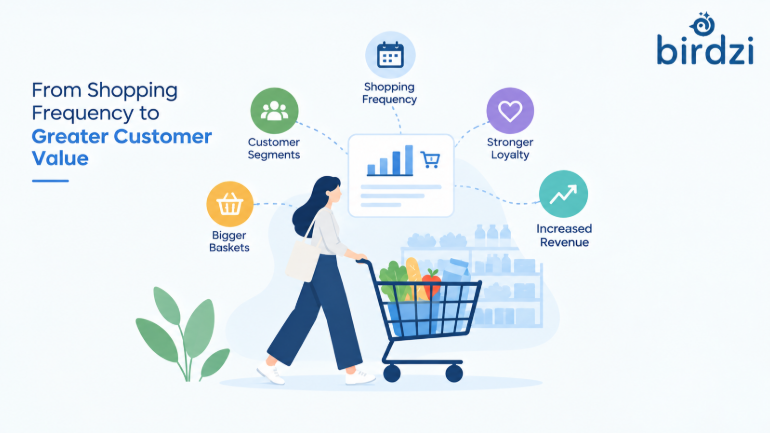
When frequency data is combined with transaction history, preferences, engagement, and other behavioral signals, retailers can build more meaningful customer segments and make more precise decisions.
The next step is turning those insights into timely action. Birdzi’s Shopper Engagement Tools enable retailers to activate shopper intelligence through targeted engagement and personalized interactions. Birdzi also provides performance intelligence that helps retailers evaluate engagement, redemption, and incremental lift.
For grocery retailers, the opportunity is clear: understand how often customers shop, identify why that behavior matters, and use those insights to create experiences that encourage stronger relationships and measurable growth.
Frequently Asked Questions
Q1. What is shopping frequency in grocery retail?
A: Shopping frequency refers to how often a customer purchases from a retailer during a defined period. It helps retailers understand engagement and identify changes in customer behavior.
Q2. Why is shopping frequency important for customer value?
A: Shopping frequency can indicate how actively a customer engages with a retailer. When combined with basket value, purchase history, and retention data, it provides a stronger view of overall customer value.
Q3. Can shopping frequency help identify at-risk customers?
A: Yes. A decline in shopping frequency can indicate reduced engagement. Retailers can monitor these changes and use targeted engagement strategies to encourage customers to return.
Q4. Should retailers measure shopping frequency on its own?
A: No. Shopping frequency is most useful when analyzed alongside metrics such as basket size, purchase recency, product preferences, promotional response, retention, and customer lifetime value.
Q5. How can retailers use shopping frequency to increase customer value?
A: Retailers can segment customers based on shopping frequency and other behavioral signals. They can then deliver relevant offers, recommendations, and engagement strategies designed to encourage repeat visits, larger baskets, and stronger retention.
Sign up for Updates
Stay current on the latest happenings at Birdzi!
"*" indicates required fields
Related Posts
 " alt="How Grocers Can Make Promotions More Relevant to Shoppers" />
 " alt="How Grocery Retailers Can Adapt Marketing to Changing Shopper Behavior" />
 " alt="What Should Grocers Look for in Customer Engagement Technology?" />
Request a 1-on-1 Demo
There’s no substitute for seeing Birdzi’s capabilities first-hand with a seasoned expert to answer all your questions.
"*" indicates required fields