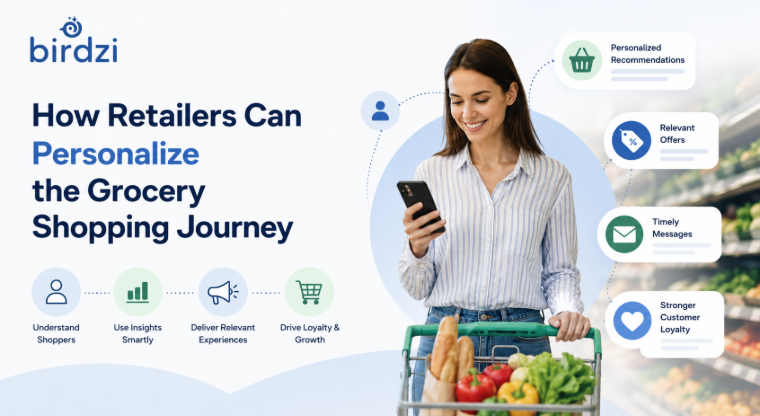
Grocery shoppers expect more relevant experiences than ever before. They interact with retailers through loyalty programs, mobile apps, websites, email, digital offers, and in store promotions. Each interaction creates an opportunity to understand what customers need and provide experiences that feel useful rather than generic.
Personalization allows grocery retailers to use shopper information to make those interactions more relevant. Instead of treating every customer the same, retailers can consider purchasing habits, product preferences, shopping frequency, engagement, and customer value when developing their marketing strategies.
The goal is not simply to personalize a message. It is to create a connected shopping journey that responds to what each customer is likely to find valuable.
Why Personalization Matters in Grocery Retail
Every shopper has different preferences and purchasing habits. One customer may regularly purchase fresh produce, while another may be more interested in household products or prepared foods. Some customers visit a store several times a week, while others shop only occasionally.
A broad marketing strategy may overlook these differences. Personalized experiences give retailers an opportunity to make their communication more relevant to individual customers.
When shoppers receive useful recommendations, appropriate offers, and timely messages, retailers can create stronger connections while making their marketing efforts more focused.
Using Shopper Data to Understand Customer Needs
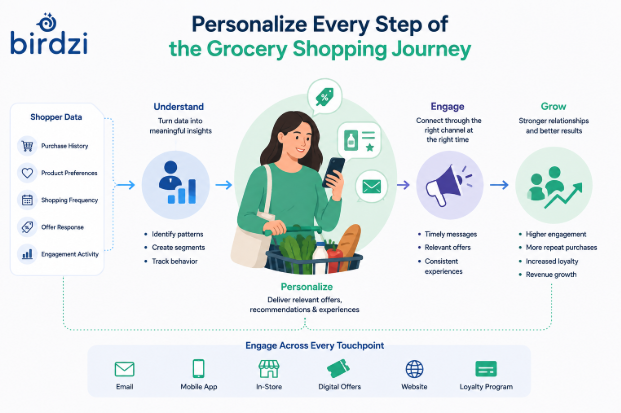
Effective personalization starts with reliable customer insights. Retailers can analyze purchase history, basket composition, shopping frequency, product preferences, promotional responses, and digital engagement to understand how customers interact with the business.
Birdzi’s Shopper Analytics platform can help retailers turn shopper information into actionable insights. Understanding these patterns allows marketing teams to identify meaningful customer groups and recognize changes in shopper behavior.
For example, a customer who frequently purchases a particular category may be interested in related products. A customer whose shopping activity has recently declined may require a different approach designed to encourage another visit.
The more clearly retailers understand these differences, the easier it becomes to create experiences that feel relevant.
Building Meaningful Customer Segments
Personalization does not require creating a completely different strategy for every individual customer. Retailers can begin by creating meaningful segments based on shared behaviors and characteristics.
Segments can be built around purchase frequency, customer value, product preferences, engagement levels, promotional response, or lifecycle stage.
A highly active customer may respond well to product recommendations and complementary offers. A newer customer may benefit from communications that introduce loyalty benefits and encourage repeat visits. Meanwhile, a customer showing declining activity could receive a targeted message designed to bring them back.
These approaches allow retailers to communicate with different audiences according to their needs rather than sending identical messages to everyone.
Creating More Relevant Offers and Recommendations
Offers become more valuable when they reflect what shoppers are actually interested in. Sending irrelevant promotions can lead to lower engagement and may cause customers to ignore future communications.
Retailers can use shopper information to identify products and categories that are more likely to interest specific customer groups. Recommendations can also be based on previous purchases, related products, or changes in shopping behavior.
For example, a shopper who regularly buys pasta could receive recommendations for complementary sauces or related grocery products. A frequent fresh food shopper could receive offers connected to products within that category.
This approach can make promotional communication feel more useful while helping retailers create opportunities for additional purchases.
Personalizing the Digital Shopping Experience
Personalization should extend beyond email promotions. Grocery retailers can use shopper insights across multiple digital touchpoints, including mobile apps, websites, digital coupons, loyalty experiences, and other customer communication channels.
Birdzi’s Shopper Personalization Platform can support retailers in creating more individualized customer experiences by connecting shopper intelligence with relevant engagement opportunities.
A connected approach means that customers can receive experiences that are more consistent with their preferences and previous interactions. This can help retailers create a smoother journey from discovery and consideration to purchase and repeat shopping.
Improving Customer Engagement Through Relevance
Customer engagement is stronger when shoppers have a reason to pay attention. Personalization can help retailers deliver messages based on what customers are more likely to value instead of relying on broad promotional campaigns.
Birdzi’s Shopper Engagement Tools can help retailers turn customer insights into relevant communications and interactions across digital channels.
Timing also matters. A useful offer delivered at the right moment can have greater value than the same offer delivered when the customer has no interest in the category.
Retailers can therefore consider both the content of a message and the timing of the interaction when developing personalized engagement strategies.
Measuring the Impact of Personalization
Personalization should be connected to measurable business outcomes. Retailers need to understand whether personalized experiences are actually improving customer behavior and contributing to growth.
Important measures can include shopping frequency, basket value, repeat purchases, offer redemption, customer retention, segment movement, and incremental revenue.
For example, retailers can compare the behavior of customers who receive personalized recommendations with similar customers who receive broader communications. This can provide useful insight into whether personalization is influencing purchasing behavior.
Measuring results also helps retailers refine their strategies over time. Successful approaches can be expanded, while weaker strategies can be adjusted based on actual customer response.
Building a More Connected Grocery Shopping Journey
Personalization works best when it is treated as an ongoing strategy rather than a single marketing tactic. Retailers need to continuously learn from shopper behavior, update customer segments, improve recommendations, and measure results.
A connected personalization strategy can help retailers understand customers more clearly and use those insights to create better experiences across the shopping journey.
The opportunity is not simply to show shoppers more offers. It is to make those offers, recommendations, and interactions more meaningful.
By combining shopper intelligence, segmentation, relevant engagement, and performance measurement, grocery retailers can create experiences that support both customer satisfaction and business growth.
FAQs
Q1. What is personalization in grocery retail?
A: Personalization in grocery retail means using shopper information and behavioral insights to provide customers with more relevant offers, recommendations, messages, and experiences based on their individual interests and shopping habits.
Q2. Why should grocery retailers personalize the customer journey?
A: Personalization can help retailers make customer interactions more relevant. It can support stronger engagement, encourage repeat purchases, improve promotional effectiveness, and create experiences that better reflect individual shopper needs.
Q3. What data can retailers use for personalization?
A: Retailers can use information such as purchase history, product preferences, shopping frequency, basket composition, customer value, promotional response, loyalty activity, and digital engagement to support personalization.
Q4. How can personalization improve grocery promotions?
A: Personalization allows retailers to provide offers that are more closely connected to customer interests and purchasing behavior. This can help reduce irrelevant promotions while creating more focused opportunities to influence purchasing decisions.
Q5. How can retailers measure personalized marketing?
A: Retailers can measure personalized marketing through metrics such as repeat purchases, shopping frequency, basket value, offer redemption, retention, customer engagement, and incremental revenue.
Sign up for Updates
Stay current on the latest happenings at Birdzi!
"*" indicates required fields
Related Posts
 " alt="Turn Shopper Insights Into More Relevant Customer Engagement" />
 " alt="How Shopper Analytics Helps Grocery Retailers Make Smarter Decisions" />
 " alt="How Personalized Offers Drive Growth for Grocery Retailers" />
Request a 1-on-1 Demo
There’s no substitute for seeing Birdzi’s capabilities first-hand with a seasoned expert to answer all your questions.
"*" indicates required fields