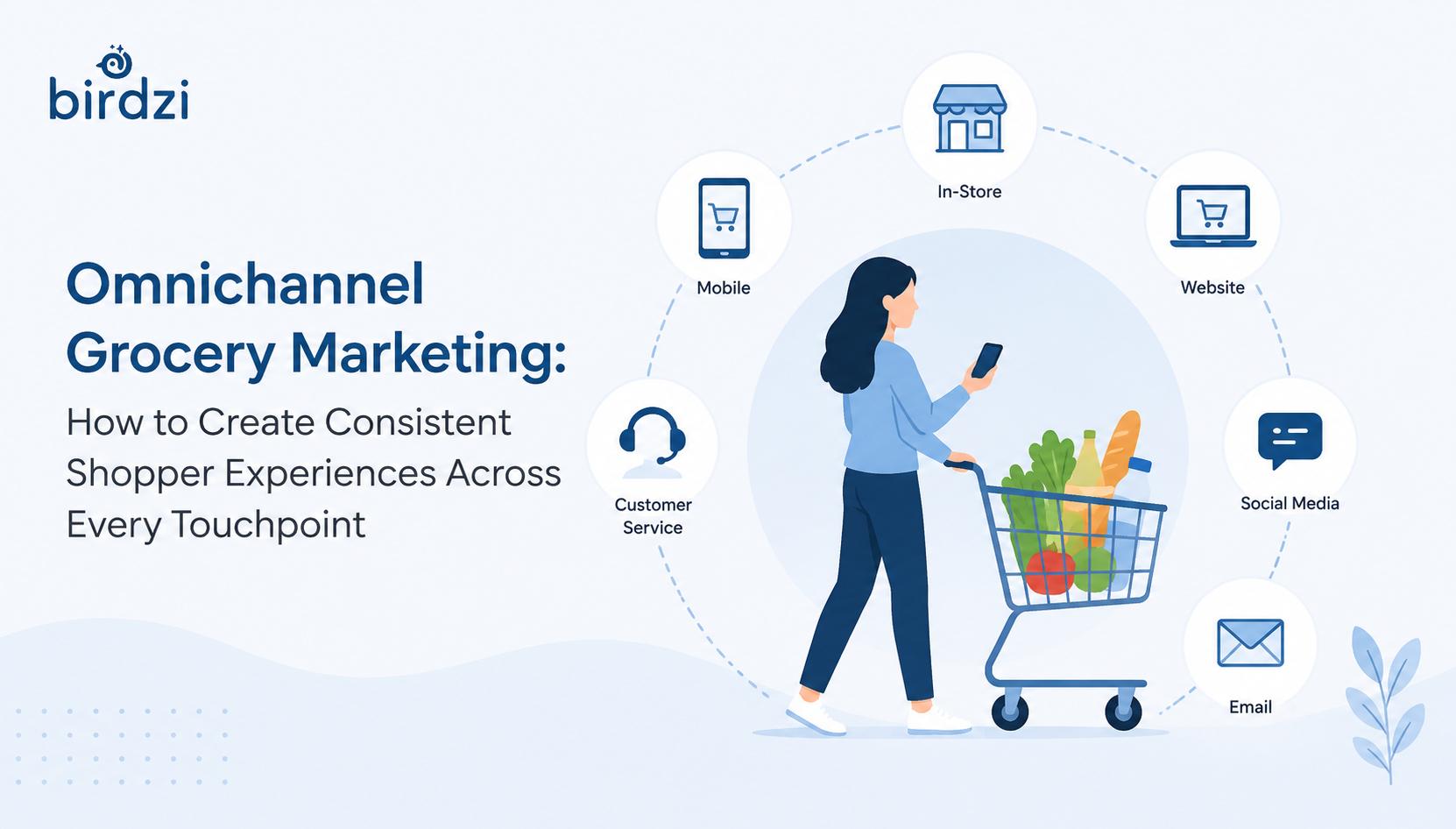
Grocery shopping no longer happens in one place. A shopper may discover a product through an email, check an offer in a mobile app, visit a retailer’s website, shop in store, and use a loyalty card at checkout. Each interaction creates an opportunity for the retailer to build a stronger relationship.
The challenge is making all of these interactions feel connected.
This is where omnichannel grocery marketing becomes important. Instead of treating email, mobile apps, ecommerce, loyalty programs, and physical stores as separate marketing channels, omnichannel marketing connects them into one consistent shopper experience.
For grocery retailers, this approach can improve customer engagement, strengthen loyalty, increase purchase frequency, and create more opportunities to personalize marketing based on real shopper behavior.
What Is Omnichannel Grocery Marketing?
Omnichannel grocery marketing is the practice of creating a connected customer experience across every channel where shoppers interact with a grocery retailer.
These touchpoints can include:
- Physical grocery stores
- Ecommerce websites
- Mobile applications
- Email marketing
- SMS campaigns
- Loyalty programs
- Digital coupons
- Social media
- Online search
- Personalized product recommendations
- Customer service
The important difference between omnichannel and multichannel marketing is connection.
A multichannel strategy may use several marketing channels, but each channel can operate independently. An omnichannel strategy connects those channels so that information and customer experiences remain consistent.
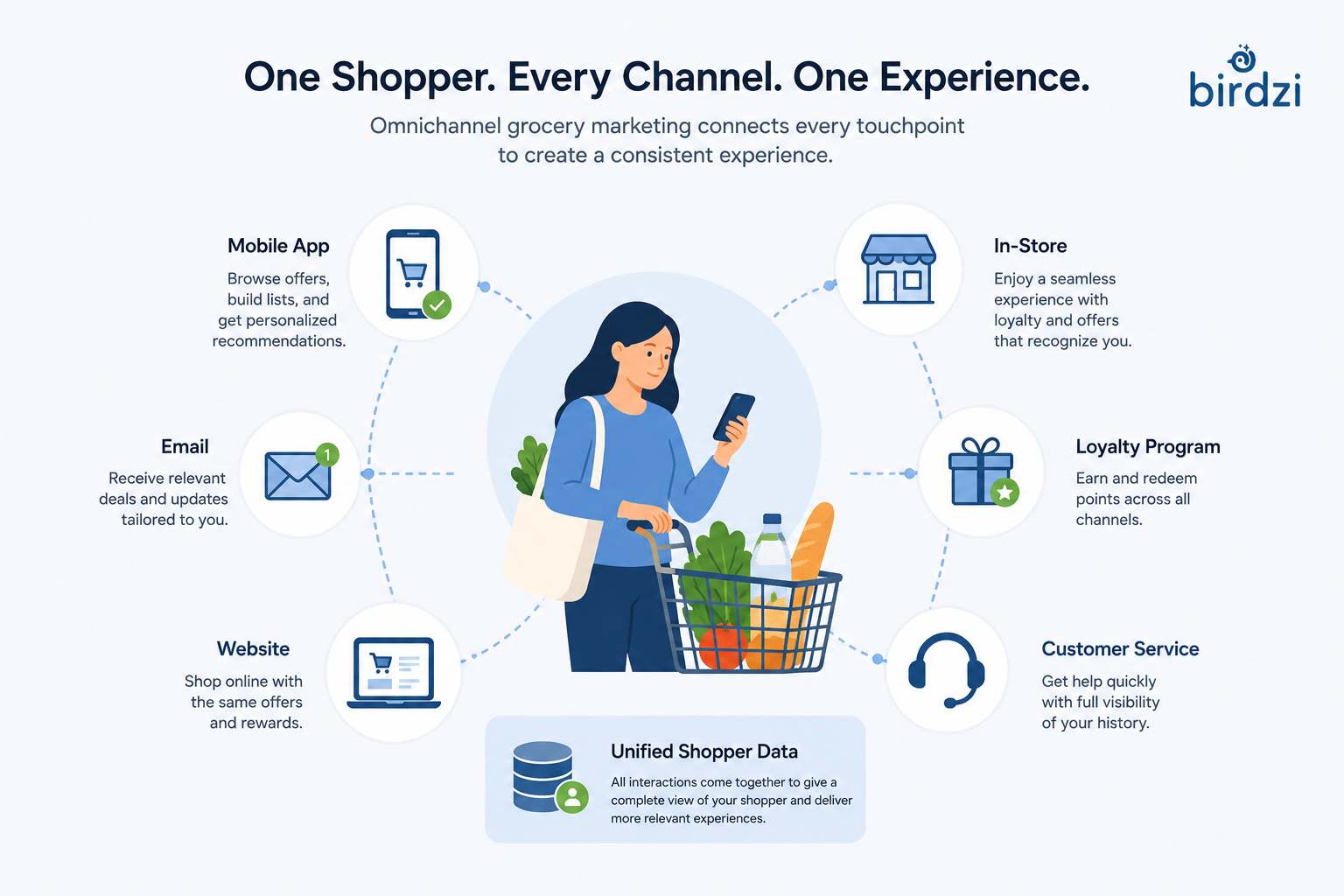
For example, a shopper might receive a digital coupon through a mobile app, use that coupon in store, earn loyalty points from the purchase, and later receive a personalized recommendation based on what they bought.
Each interaction contributes to the next one.
Why Omnichannel Marketing Matters in Grocery Retail
Grocery shoppers interact with retailers frequently. Unlike industries where customers may purchase only a few times a year, grocery customers can visit multiple times each month or even each week.
This creates a large number of opportunities for engagement.
However, frequent interactions also create higher expectations.
A shopper may expect:
- Loyalty rewards to work online and in store
- Digital coupons to be available when they shop
- Product recommendations to reflect their preferences
- Promotions to remain consistent across channels
- Their purchase history to be recognized
- Marketing messages to be relevant
When these experiences are disconnected, customers can become frustrated.
For example, imagine receiving a digital coupon through an app only to discover that the offer cannot be redeemed in store. Or imagine receiving an email promoting products you regularly buy while the retailer’s website recommends completely unrelated products.
These small inconsistencies can weaken customer trust.
The Difference Between Multichannel and Omnichannel Marketing
Understanding the difference is important when developing a grocery marketing strategy.
| Multichannel Marketing | Omnichannel Marketing |
| Uses several channels | Connects several channels |
| Channels may operate separately | Channels work together |
| Customer data can remain fragmented | Customer data is unified |
| Messaging may differ between channels | Messaging is more consistent |
| Limited view of the customer journey | Connected view of shopper behavior |
| Personalization can be inconsistent | Personalization can continue across touchpoints |
The goal of omnichannel marketing is not simply to use more channels.
The goal is to make every channel work together.
First Party Shopper Data Is the Foundation
An effective omnichannel strategy depends on understanding the shopper.
Retailers collect valuable first party data through loyalty programs, point of sale transactions, ecommerce activity, mobile apps, digital coupons, and other interactions.
When this information is connected, retailers can build a more complete view of each shopper.
For example, a retailer may discover that a customer:
- Shops in store every Saturday
- Uses the mobile app before visiting
- Frequently purchases organic products
- Responds to digital coupons
- Buys the same household products every month
This information can then be used to create a more relevant customer experience.
Birdzi’s Shopper Analytics helps grocery retailers turn shopper data into actionable insights.
Learn more about Shopper Analytics.
By understanding purchasing patterns and customer behavior, retailers can make better decisions about segmentation, promotions, loyalty, and personalized marketing.
Create Consistent Messaging Across Every Touchpoint
Consistency does not mean sending exactly the same message everywhere.
Instead, the message should remain connected while being adapted to the channel.
For example, a grocery retailer may launch a promotion for a new product.
The customer could discover the promotion through:
- An email announcement
- A mobile app notification
- A personalized website recommendation
- A digital coupon
- An in store promotion
Each channel can present the offer differently, but the customer should receive the same core information.
This reduces confusion and creates a smoother shopping experience.
Personalization Makes Omnichannel Marketing More Powerful
Consistency is important, but personalization is what makes an omnichannel experience truly useful.
A retailer should not treat every shopper in the same way.
One customer may care about price and weekly specials. Another may prioritize organic products. Someone else may respond better to loyalty rewards.
Birdzi’s Shopper Personalization Platform helps grocery retailers create individualized experiences based on shopper behavior and preferences.
Learn more about Shopper Personalization Platform.
Personalization can include:
- Product recommendations
- Personalized promotions
- Digital coupons
- Loyalty rewards
- Cross sell opportunities
- Shopping reminders
- Relevant content
The same customer preferences can inform interactions across multiple channels, creating a more connected experience.
Connect Customer Engagement With Shopper Insights
Data becomes valuable when retailers can act on it.
Once a retailer understands what customers want, it needs the tools to deliver relevant experiences.
Birdzi’s Shopper Engagement Tools help retailers turn shopper insights into targeted marketing and engagement.
Learn more about Shopper Engagement Tools.
Retailers can use customer insights to support:
- Email campaigns
- Digital coupons
- Loyalty programs
- Customer communications
- Targeted promotions
- Personalized engagement
For example, a shopper who has not visited recently could receive a relevant incentive through email or a mobile app. If that shopper returns and makes a purchase, their latest activity can inform future communications.
This creates a continuous cycle of insight, engagement, purchase, and learning.
Build a Connected Grocery Customer Journey
An omnichannel strategy should follow the customer rather than forcing customers to follow the retailer’s channels.
Consider a simple grocery shopping journey.
Discovery
A shopper sees a retailer’s promotion through search, social media, or email.
Research
They visit the website or mobile app to explore products and offers.
Decision
A personalized recommendation or digital coupon encourages them to purchase.
Purchase
The customer shops online or visits a physical store.
Loyalty
The purchase is connected to their loyalty profile, helping the retailer understand their preferences.
Reengagement
The retailer uses those insights to deliver relevant communication before the next likely shopping occasion.
Each stage connects to the next.
That is the foundation of an effective omnichannel grocery marketing strategy.
Use Loyalty Programs to Connect Online and Offline Shopping
Loyalty programs are particularly valuable because they can connect customer behavior across physical and digital channels.
When shoppers identify themselves through a loyalty account, retailers can connect purchases with broader customer activity.
This helps retailers understand:
- How frequently customers shop
- What products they purchase
- Which offers they redeem
- How their shopping behavior changes
- Which channels generate engagement
Loyalty data can then support more relevant campaigns and stronger customer relationships.
Measure More Than Just Traffic
A successful omnichannel strategy should be measured against business outcomes rather than channel activity alone.
Important metrics include:
| Metric | What It Shows |
| Customer retention | Whether shoppers continue returning |
| Purchase frequency | How often customers shop |
| Average basket value | How much customers spend |
| Loyalty engagement | How actively customers use the loyalty program |
| Coupon redemption | Whether promotions motivate purchases |
| Conversion rate | Whether marketing produces action |
| Customer Lifetime Value | Long term customer value |
| Organic conversions | Whether search traffic generates business results |
Looking at these metrics together gives retailers a clearer picture of whether their omnichannel strategy is actually improving customer relationships.
Why Birdzi Supports Omnichannel Grocery Marketing
Creating a consistent experience across every touchpoint requires more than adding another marketing channel.
Retailers need connected customer intelligence that brings shopper behavior, engagement, and personalization together.
The Birdzi Customer Intelligence Platform is designed specifically for grocery retailers and combines shopper analytics, engagement tools, and personalization capabilities.
Learn more about Birdzi.
This connected approach helps grocery retailers understand their customers, turn insights into action, and create personalized experiences across the shopper journey.
Rather than relying on disconnected marketing activities, retailers can build a more complete understanding of customers and use that intelligence to improve engagement and loyalty.
The Future of Omnichannel Grocery Marketing
The grocery customer journey will continue to become more connected.
Mobile apps, ecommerce, loyalty programs, digital promotions, personalized recommendations, and physical stores will increasingly work together.
Artificial intelligence and predictive analytics will also help retailers understand shopper behavior and anticipate customer needs.
However, successful omnichannel marketing will still depend on a basic principle: understand the shopper first.
Technology can connect channels, but customer intelligence makes those connections meaningful.
Retailers that combine first party shopper data with analytics, personalization, and customer engagement will be better positioned to deliver experiences that shoppers value.
Conclusion
Omnichannel grocery marketing is about creating one connected customer experience across every touchpoint.
Whether a shopper interacts with a retailer through a mobile app, website, email, loyalty program, digital coupon, or physical store, the experience should feel consistent and relevant.
The foundation of that experience is first party shopper data.
By connecting customer information and using it to understand behavior, grocery retailers can personalize marketing, improve loyalty, increase engagement, and create stronger long term customer relationships.
Birdzi helps grocery retailers achieve this through its Customer Intelligence Platform, bringing together Shopper Analytics, Shopper Engagement Tools, and Shopper Personalization to help retailers turn customer data into meaningful action.
For grocery retailers competing on both convenience and customer loyalty, creating a connected experience across every touchpoint is no longer simply a marketing advantage. It is becoming an essential part of modern grocery retail.
Frequently Asked Questions
What is omnichannel grocery marketing?
Omnichannel grocery marketing connects a retailer’s physical and digital marketing channels to create a consistent and personalized shopper experience.
What is the difference between multichannel and omnichannel marketing?
Multichannel marketing uses several channels, while omnichannel marketing connects those channels so customer information, messaging, and experiences can work together.
Why is first party data important for omnichannel grocery marketing?
First party data helps retailers understand real shopper behavior across loyalty programs, purchases, ecommerce, mobile apps, and other touchpoints. This information supports more relevant personalization.
How can grocery retailers improve their omnichannel experience?
Retailers can connect customer data, maintain consistent messaging, personalize promotions, integrate loyalty programs across online and offline channels, and measure customer behavior across the entire journey.
How does Birdzi help grocery retailers?
Birdzi combines Shopper Analytics, Shopper Engagement Tools, and Shopper Personalization within a Customer Intelligence Platform designed for grocery retailers. This helps retailers understand shoppers, activate insights, and deliver more relevant experiences across customer touchpoints.
Sign up for Updates
Stay current on the latest happenings at Birdzi!
"*" indicates required fields
Related Posts
 " alt="How Grocers Can Make Promotions More Relevant to Shoppers" />
 " alt="How Grocery Retailers Can Adapt Marketing to Changing Shopper Behavior" />
 " alt="What Should Grocers Look for in Customer Engagement Technology?" />
Request a 1-on-1 Demo
There’s no substitute for seeing Birdzi’s capabilities first-hand with a seasoned expert to answer all your questions.
"*" indicates required fields