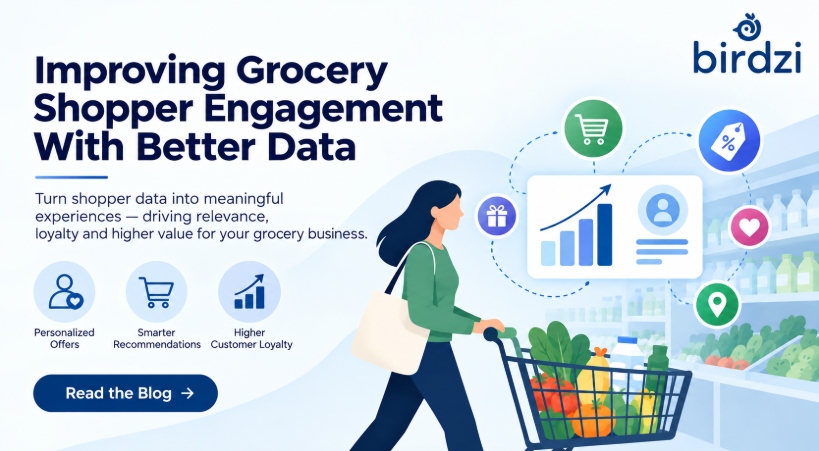
Grocery retailers have more opportunities than ever to understand and engage their customers. Loyalty programs, point-of-sale transactions, ecommerce activity, promotions, and digital interactions all generate valuable information about shopper behavior. The challenge is turning that information into meaningful engagement rather than simply collecting more data.
Data-driven shopper engagement allows retailers to move beyond broad campaigns and respond to what customers actually do. By understanding purchasing habits, preferences, and engagement patterns, retailers can create more relevant experiences while making better use of their marketing resources.
For grocery businesses, this approach can support stronger loyalty, more relevant promotions, and improved customer value. It also gives marketing and merchandising teams a clearer foundation for deciding which shoppers to target, what messages to deliver, and how to measure the results.
What Is Data-Driven Shopper Engagement?
Data-driven shopper engagement is the use of customer and transaction data to create more relevant interactions with shoppers. Instead of sending the same promotion or message to an entire customer base, retailers can use behavioral information to determine which customers are most likely to respond to specific products, offers, or communications.
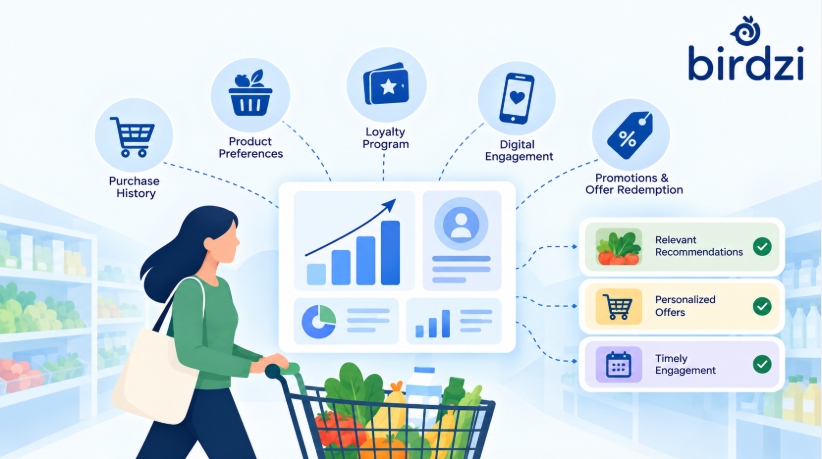
This data can include purchase history, shopping frequency, product preferences, basket composition, offer redemption, and digital engagement. When these signals are analyzed together, retailers can develop a clearer picture of individual shoppers and meaningful customer segments.
For example, a shopper who frequently purchases fresh produce may respond to different messaging than someone who primarily buys packaged convenience foods. Recognizing these differences allows retailers to make engagement more relevant without relying on assumptions about the entire customer base.
Why Generic Engagement Strategies Fall Short
Broad marketing campaigns can be useful when retailers need to reach a large audience quickly, but they do not always create meaningful engagement. Sending the same message to every customer assumes that shoppers have similar needs, preferences, and purchasing habits.
That assumption can result in irrelevant offers and unnecessary discounts. A customer may receive a promotion for a product they never purchase, while another customer who regularly buys that category receives no relevant incentive at all.
Data-driven engagement addresses this problem by allowing retailers to identify behavioral differences within their customer base. Instead of asking how to reach the largest possible audience, teams can focus on reaching the right shoppers with more relevant messages.
Turning Customer Data Into Action
Customer data becomes valuable when it helps retailers make better decisions. By analyzing changes in visit frequency, purchase history, and engagement, retailers can identify different shopper needs and develop targeted strategies instead of applying the same solution to everyone.
This is where Birdzi’s Shopper Analytics platform helps retailers turn shopper information into actionable insights that can support marketing, merchandising, and customer engagement decisions.
Personalization Makes Engagement More Relevant
Effective personalization goes beyond using a customer’s name. By analyzing purchase history and preferences, retailers can deliver relevant offers that encourage repeat visits, complement existing purchases, and increase basket value.
Creating More Timely Shopper Interactions
Relevance also depends on timing, as shopper needs can change with seasonality, household needs, pricing, product availability, and purchasing patterns. Retailers need engagement strategies that respond to current behavior rather than relying solely on static customer profiles.
Birdzi’s Shopper Engagement Tools connect shopper insights with targeted engagement, helping retailers act on customer information through relevant offers and interactions.
A timely approach can make engagement more useful while reducing the likelihood of customers receiving promotions that no longer match their needs.
Measuring the Impact of Shopper Engagement
Data-driven engagement should also be measurable. Retailers need to understand whether their campaigns are actually changing customer behavior or simply generating activity that would have occurred anyway.
Redemption rates can provide useful information, but they do not tell the complete story. A customer may redeem a coupon for a product they were already planning to purchase. Looking at metrics such as incremental revenue, purchase frequency, basket size, and customer retention can provide a clearer view of campaign performance.
Measurement also allows retailers to compare different strategies. If one type of personalized offer consistently generates stronger incremental results than a broad promotion, retailers can use that information to refine future campaigns.
Using Data to Strengthen Customer Loyalty
Effective engagement supports stronger loyalty by providing customers with relevant value instead of disconnected promotions. Understanding shopper behavior helps retailers reward frequent customers and re-engage those whose activity is declining.
This approach also helps retailers avoid unnecessary discounts by targeting incentives where they are most likely to influence behavior. Over time, relevant interactions can strengthen customer relationships and improve promotional efficiency.
A Practical Example of Data-Driven Engagement
A grocery retailer may notice that some customers have stopped purchasing a particular category. Instead of sending the same discount to everyone, the retailer can analyze recent behavior to identify whether shoppers have switched categories or reduced their overall visits.
Based on these insights, the retailer can test different engagement strategies, such as relevant recommendations or return-visit incentives. Comparing the results helps identify which approaches create meaningful changes in shopper behavior.
Personalization and Revenue Growth
The long-term value of shopper engagement comes from creating interactions that benefit both the customer and the retailer. Relevant offers can make shopping more convenient for customers while creating opportunities to increase purchase frequency or basket value.
Birdzi’s Shopper Personalization Platform connects shopper data with personalized activation and measurement, helping retailers understand how different engagement strategies influence customer behavior and revenue.
When personalization is supported by measurement, retailers can refine their strategies based on actual outcomes rather than assumptions about what customers might want.
Conclusion
Data-driven shopper engagement helps grocery retailers better understand customer behavior and deliver more relevant experiences.
By combining insights, personalization, and timely engagement, retailers can create stronger customer connections. Measuring these interactions helps identify what strategies are driving meaningful results. This approach can ultimately strengthen loyalty and support long-term retail growth.
Frequently Asked Questions
Q1. What is data-driven shopper engagement?
A: Data-driven shopper engagement uses customer and transaction data to create more relevant marketing messages, offers, and interactions based on actual shopper behavior.
Q2. Why is data important for grocery shopper engagement?
A: Customer data helps retailers understand purchasing patterns, preferences, and engagement changes, allowing them to create more relevant experiences instead of relying on broad assumptions.
Q3. How does personalization improve shopper engagement?
A: Personalization helps retailers align offers and messages with individual purchasing behavior and preferences, making interactions more relevant to each shopper.
Q4. How can retailers measure shopper engagement?
A: Retailers can evaluate metrics such as incremental revenue, purchase frequency, basket size, offer redemption, engagement, and customer retention to assess campaign performance.
Q5. Can data-driven engagement help improve customer loyalty?
A: Yes. More relevant offers and interactions can help retailers provide consistent value, strengthen customer relationships, and encourage shoppers to remain engaged over time.
Sign up for Updates
Stay current on the latest happenings at Birdzi!
"*" indicates required fields
Related Posts
 " alt="How Grocers Can Make Promotions More Relevant to Shoppers" />
 " alt="How Grocery Retailers Can Adapt Marketing to Changing Shopper Behavior" />
 " alt="What Should Grocers Look for in Customer Engagement Technology?" />
Request a 1-on-1 Demo
There’s no substitute for seeing Birdzi’s capabilities first-hand with a seasoned expert to answer all your questions.
"*" indicates required fields