Retailers have more opportunities to connect with shoppers than ever before. From loyalty programs and digital coupons to mobile apps, email campaigns, websites, and in-store promotions, every interaction can influence the customer experience.
But simply increasing the number of interactions is not enough. Shoppers are more likely to engage when retailers provide something relevant and useful.
Meaningful shopper touchpoints are about delivering the right message, offer, or experience at the right time. By using shopper data to understand customer behavior, retailers can create more personalized interactions that strengthen loyalty, increase engagement, and support revenue growth.
What Are Shopper Touchpoints?
A shopper touchpoint refers to any moment when a customer connects with a retailer, whether they are discovering products, making a purchase, or engaging after their visit.
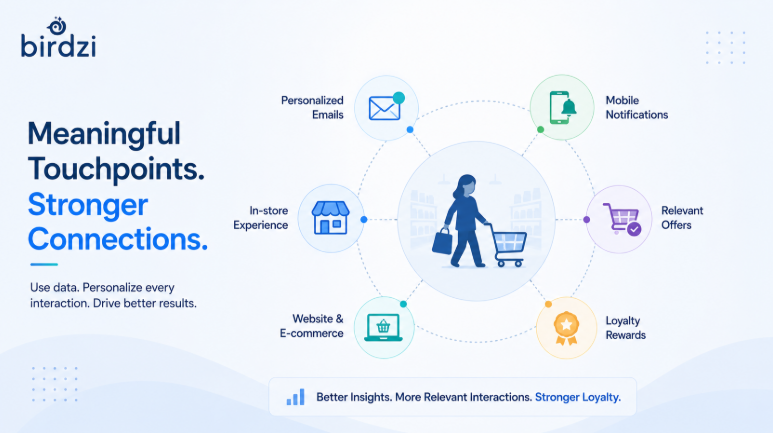
Common shopper touchpoints include:
- Loyalty program communications
- Personalized promotions
- Digital coupons
- Product recommendations
- Email campaigns
- Mobile notifications
- E-commerce experiences
- Digital circulars
- In-store promotions
- Post-purchase communications
Every interaction gives retailers a chance to deliver something useful, but the real challenge is ensuring each one aligns with the shopper’s needs and interests.
When retailers rely on generic promotions, they risk creating unnecessary communication. When they use customer insights to make interactions more relevant, those same touchpoints can become valuable opportunities for engagement.
Why Meaningful Shopper Touchpoints Matter
Modern shoppers receive promotional messages from countless brands and retailers. A generic discount may be easy to ignore, while an offer connected to a shopper’s interests can immediately stand out.
This makes relevance increasingly important.
Retailers can use transaction history, purchasing patterns, engagement behavior, and customer preferences to understand what different shoppers are likely to respond to.
For example, a customer who regularly purchases organic products may be more interested in a promotion for organic produce than a general store-wide discount.
The objective is not to communicate more frequently. It is to communicate more intelligently.
Use Shopper Data to Understand Customer Behavior
Creating meaningful experiences starts with understanding shoppers.
Retailers collect valuable information through loyalty programs, transactions, digital interactions, promotions, and other customer activities. However, collecting data alone does not create better experiences. Retailers need to transform that information into insights they can use.
Birdzi’s Shopper Analytics platform helps retailers turn customer data into actionable intelligence. The platform supports behavioral prediction, strategic targeting, customer segmentation, and performance analysis, helping retailers identify opportunities and make more informed decisions.
These insights can help marketing teams identify different customer groups, understand purchasing behavior, recognize changes in shopper activity, and determine where new engagement opportunities exist.
Instead of treating every customer the same, retailers can build strategies around actual shopper behavior.
Make Every Interaction More Personalized
Personalization can make a significant difference in how shoppers respond to retail marketing.
However, effective personalization goes beyond simply adding a shopper’s name to an email. It means tailoring the content, promotion, recommendation, or message to information that is actually relevant to the customer.
Retailers can personalize experiences based on:
- Previous purchases
- Product preferences
- Shopping frequency
- Favorite categories
- Promotional engagement
- Customer lifecycle stage
- Changes in purchasing behavior
Birdzi’s Shopper Personalization Platform helps retailers create more relevant experiences by using shopper preferences and behaviors to inform recommendations, promotions, and content.
When shoppers consistently receive information that aligns with their needs, retailers can create interactions that feel more useful and less like generic advertising.
Connect Touchpoints Across the Shopper Journey
A shopper may interact with a retailer through several channels before completing a purchase.
They might discover a promotion through email, browse products online, receive a personalized offer through a loyalty program, and then visit a physical store.
If these channels operate independently, the shopper experience can become disconnected.
Retailers should instead aim to create a consistent journey where each interaction supports the next. Data can help retailers understand where a shopper is in the customer journey and determine which type of communication may be most relevant.
This connected approach can also help marketing teams understand how different touchpoints influence customer behavior.
Turn Insights Into Action
Data is only valuable when retailers can use it to make better decisions.
Once a retailer identifies a valuable shopper segment or behavior pattern, the next step is acting on that insight. This could mean creating a targeted campaign, launching a personalized promotion, re-engaging inactive customers, or adjusting a product-focused marketing strategy.
Birdzi’s Shopper Engagement Tools help retailers turn shopper insights into targeted engagement and actionable marketing strategies.
A strong shopper engagement process can follow a simple cycle:
Understand → Personalize → Engage → Measure → Improve
This approach gives retailers an opportunity to learn from each campaign and continuously improve the customer experience.
Measure What Drives Shopper Engagement
Meaningful touchpoints should produce measurable results.
Retailers can evaluate performance using metrics such as:
- Offer redemption rates
- Campaign engagement
- Repeat purchases
- Purchase frequency
- Average basket size
- Customer retention
- Campaign revenue
- Category performance
These measurements help retailers understand whether their engagement strategies are influencing shopper behavior.
For example, if a personalized promotion generates stronger engagement or higher redemption than a broad promotion, that insight can inform future campaigns.
Measurement also helps retailers connect marketing activity with business outcomes. Instead of simply reporting how many customers received a promotion, teams can focus on whether that promotion encouraged meaningful action.
Build Stronger Shopper Relationships
Meaningful shopper touchpoints are ultimately about creating value.
Retailers already have access to valuable customer information. The opportunity is to use that information to understand shoppers, personalize interactions, and deliver relevant experiences throughout the customer journey.
When retailers make each interaction more useful, they can create stronger relationships while improving the effectiveness of their marketing efforts.
Birdzi helps retailers connect shopper intelligence, personalization, and engagement to create more relevant customer experiences and turn insights into measurable opportunities.
Ready to create more meaningful shopper touchpoints? Explore Birdzi’s platform and discover how your retail business can turn shopper data into smarter engagement and stronger revenue opportunities.
Frequently Asked Questions
Q.1 What are meaningful shopper touchpoints?
A: Meaningful shopper touchpoints are relevant interactions between retailers and customers that provide value during the shopping journey. They can include personalized offers, recommendations, loyalty communications, and targeted promotions.
Q.2 How can retailers improve shopper touchpoints?
A: Retailers can improve shopper touchpoints by using customer data to understand preferences, purchasing behavior, and engagement patterns. These insights can then be used to create more relevant communications and experiences.
Q.3 Why is personalization important for retailers?
A: Personalization helps retailers deliver offers, recommendations, and content that are more relevant to individual shoppers or customer segments. This can improve engagement and make marketing communications more useful.
Q.4 What shopper data can retailers use?
A: Retailers can analyze transaction history, purchase frequency, product preferences, loyalty activity, campaign engagement, and other behavioral signals to better understand their customers.
Q5. How can retailers measure shopper engagement?
A: Retailers can measure engagement through metrics such as offer redemption, campaign response, repeat purchases, purchase frequency, basket size, retention, and revenue generated from campaigns.
Sign up for Updates
Stay current on the latest happenings at Birdzi!
"*" indicates required fields
Related Posts
 " alt="How Grocers Can Deliver More Relevant Product Suggestions" />
 " alt="Using Shopping Frequency to Understand Customer Value" />
 " alt="Using Shopper Preferences to Improve Product Discovery" />
Request a 1-on-1 Demo
There’s no substitute for seeing Birdzi’s capabilities first-hand with a seasoned expert to answer all your questions.
"*" indicates required fields