Grocery shoppers are presented with thousands of products, making it increasingly important for retailers to help customers find items that match their needs. Generic recommendations may create little value when they are not based on what shoppers actually buy, prefer, or need.
For grocers, relevant product suggestions can make product discovery easier while creating opportunities to increase basket size, repeat purchases, and customer engagement.
The key is to move beyond simply recommending popular products. By using shopper data and behavioral insights, retailers can deliver suggestions that are more closely aligned with individual customer preferences.
Why Relevant Product Suggestions Matter
Product recommendations can influence what shoppers notice, consider, and ultimately purchase. However, relevance is critical. A recommendation is more likely to be useful when it reflects a shopper’s previous purchases, preferences, shopping habits, or current needs.
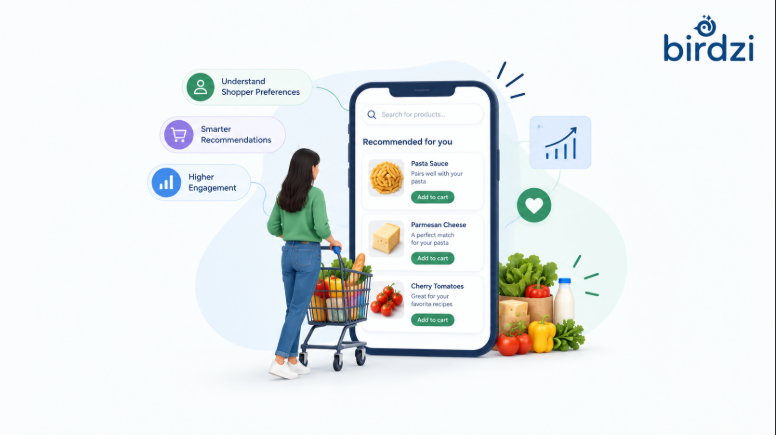
For example, a customer who regularly purchases pasta may be interested in pasta sauce, parmesan, or other complementary products. A shopper who frequently buys a particular brand may be more receptive to recommendations from that brand.
Relevant suggestions can help grocers:
- Improve product discovery
- Increase basket size
- Encourage repeat purchases
- Promote complementary products
- Strengthen customer engagement
- Create more personalized shopping experiences
When recommendations are based on actual shopper behavior, retailers can make each interaction more useful and commercially meaningful.
Use Shopper Data to Understand What Customers Want
Effective product suggestions begin with understanding the shopper.
Retailers can analyze data such as:
- Purchase history
- Product preferences
- Shopping frequency
- Basket composition
- Category preferences
- Promotional engagement
- Purchase recency
- Customer segments
This information can reveal patterns that would otherwise be difficult to identify.
For example, a shopper may consistently purchase breakfast products but rarely purchase beverages that complement them. Another customer may frequently purchase products from a specific category but has not tried a newly introduced product within that category.
These behavioral signals can help retailers identify opportunities for more relevant recommendations.
Connect Product Recommendations With Customer Segmentation
Not every shopper should receive the same product suggestions.
A retailer’s customer base can include frequent shoppers, occasional shoppers, high-value customers, price-sensitive shoppers, and customers with specific category preferences. Each group may respond differently to product recommendations.
Customer segmentation allows retailers to create more targeted recommendation strategies.
For example:
Frequent Shoppers
Frequent customers may respond well to complementary products, new arrivals, or products related to their regular purchases.
High-Value Customers
High-value shoppers may present opportunities for premium products, relevant cross-selling, and recommendations based on their broader purchasing patterns.
Occasional Shoppers
Occasional customers may benefit from recommendations that encourage them to return or introduce them to products relevant to their previous purchases.
Category-Focused Shoppers
Customers who consistently purchase within particular categories can receive suggestions that expand their options within those categories.
This approach helps retailers avoid treating every shopper as though they have identical needs.
Turn Customer Insights Into Better Recommendations
Data becomes valuable when retailers can use it to make decisions. Birdzi’s Shopper Analytics platform helps retailers analyze shopper behavior and turn customer data into actionable insights.
Instead of relying solely on broad assumptions, retailers can use behavioral patterns to determine which products may be most relevant to different customers.
This can also help answer important questions:
- Which products are frequently purchased together?
- Which products are popular among specific customer segments?
- Which shoppers are most likely to purchase a particular product?
- Which categories have opportunities for cross-selling?
- Which customer behaviors indicate an opportunity for a new recommendation?
The answers can help retailers develop recommendation strategies based on evidence rather than guesswork.
Personalize Product Suggestions at the Right Time
Relevance is not only about what a retailer recommends. Timing also matters.
A product suggestion can be more effective when it appears at a point in the shopping journey when the customer is most likely to consider it.
For example, retailers can use shopper behavior to recommend complementary products after a purchase, highlight relevant products during digital shopping, or introduce products that align with a customer’s established preferences.
Personalization can also help retailers avoid overwhelming customers with irrelevant offers. Birdzi’s Shopper Personalization Platform enables retailers to connect shopper insights with personalized experiences that are designed around individual customer behavior.
The objective is to make recommendations feel useful rather than intrusive.
Measure the Impact of Product Recommendations
Product recommendations should be measured based on their contribution to business and customer outcomes.
Retailers can monitor metrics such as:
- Recommendation engagement
- Click-through rates
- Conversion rates
- Average basket value
- Cross-category purchases
- Repeat purchase rate
- Incremental revenue
- Customer retention
Measuring these outcomes helps retailers understand which recommendation strategies are producing results.
It also creates an opportunity to continuously improve. Retailers can test different recommendations, evaluate customer responses, and refine their approach based on performance.
Turn Recommendations Into Ongoing Customer Engagement
Relevant product suggestions should form part of a broader customer engagement strategy rather than operate as isolated promotions.
When recommendations are connected with loyalty programs, personalized offers, digital communications, and other customer touchpoints, retailers can create a more consistent experience across the shopping journey.
Birdzi’s Shopper Engagement Tools help retailers activate customer insights through targeted engagement and personalized interactions.
For grocery retailers, the opportunity is straightforward: understand what customers buy, identify what they may need next, and deliver useful recommendations at the right time.
By combining shopper data, segmentation, personalization, and performance measurement, grocers can make product discovery more relevant while creating opportunities for stronger engagement, larger baskets, and sustainable customer value.
Frequently Asked Questions
Q1. What are relevant product suggestions in grocery retail?
A: Relevant product suggestions are product recommendations tailored to a shopper’s purchasing behavior, preferences, interests, and shopping patterns rather than being based solely on general popularity.
Q2. How can grocers make product recommendations more relevant?
A: Grocers can analyze purchase history, basket composition, shopping frequency, category preferences, and customer segments to identify products that are more likely to interest individual shoppers.
Q3. Can product recommendations increase basket size?
A: Yes. Relevant recommendations can encourage shoppers to discover complementary products or additional items that align with their existing purchases, potentially increasing basket value.
Q4. Why is personalization important for product recommendations?
A: Personalization helps retailers provide different recommendations to different shoppers based on their individual behaviors and preferences. This can make product suggestions more useful and engaging.
Q5. How should grocers measure product recommendation performance?
A: Grocers can measure recommendation performance using metrics such as engagement, conversion rate, average basket value, repeat purchases, incremental revenue, and customer retention.
Sign up for Updates
Stay current on the latest happenings at Birdzi!
"*" indicates required fields
Related Posts
 " alt="Using Shopping Frequency to Understand Customer Value" />
 " alt="How Retailers Can Create More Meaningful Shopper Touchpoints" />
 " alt="Using Shopper Preferences to Improve Product Discovery" />
Request a 1-on-1 Demo
There’s no substitute for seeing Birdzi’s capabilities first-hand with a seasoned expert to answer all your questions.
"*" indicates required fields