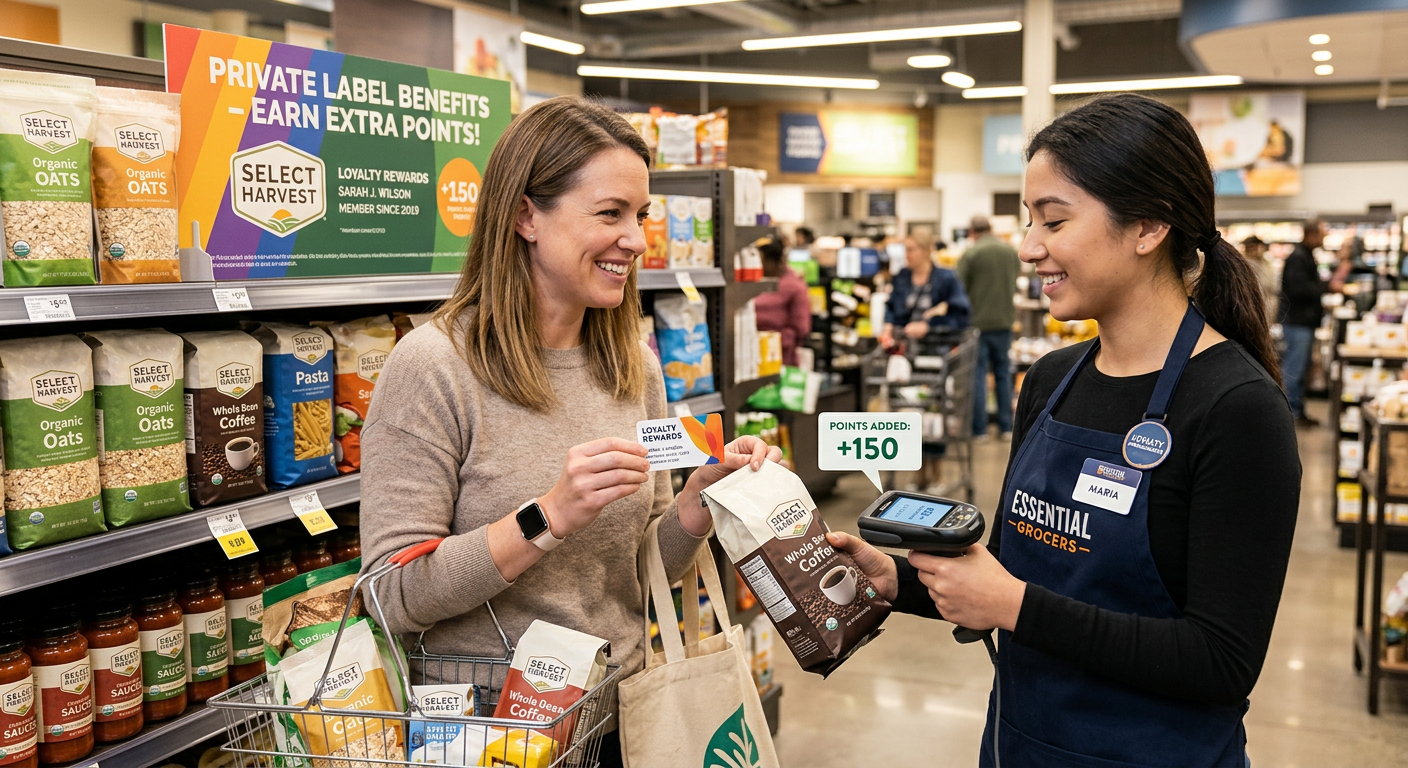
When the practice began, private label items were simply a price alternative to attract cost-sensitive shoppers. But in recent decades, their impact across retail has exploded.
Today, grocers of all sizes offer a wealth of private label options, often across several different brand names, at a variety of price points. Often, these labels now represent billion-dollar brands that are also sold through wholesalers to additional retailers. What has driven this explosive growth?
Private Label’s Evolved Perception
When retailers first began developing their own products to meet a lower price point, it established the perception that private label meant lower quality. However, in the decades since, retailers have invested heavily in ensuring their own brands and offerings are equivalent to national brands. Some now offer higher-quality branded products than the national alternatives.
Additionally, retailers today recognize their advantage over national CPG brands. Traditionally, grocers relied on these brands to understand product categories and customer spending. However, thanks to unique shopper data and loyalty programs, retailers today know their customers better than anyone.
Stores now act as their own category captains, which has informed and driven their brand product development and growth.
When combined with a new perception among younger consumers, it’s no surprise that private label now accounts for about 30% of a retailer’s total sales.
Put simply, the value, quality, and innovation that retailers offer through their brands today are attracting more spending than ever before.
A Land of Opportunity
Private label is clearly here to stay, and that creates a world of opportunity for grocers. Here are a few ways that private label proves useful:
Retailer Brands Thrive Amid Economic Downturns
First, private label sales tend to do well during times of economic uncertainty. Financial pressures and inflation push shoppers to find creative ways to cut costs, making retailer brands an attractive choice, even for shoppers who aren’t already attracted to the category.
Inflationary pressures and the recent bird flu outbreak have led more grocery shoppers to turn to private label in 2025 than ever before, proving there will always be a need for these brands.
Product Differentiation Drives Loyalty
Second, retailers understand the power of their brands when it comes to developing unique products and offerings. Private label doesn’t have to be chocolate cookies or CPG knock-off snacks. Grocers are using private label to develop unique products that shoppers can’t find elsewhere.
By expanding product assortments, retailers create strong emotional and habitual connections with shoppers. Providing products that are exclusively available at a retailer builds strong loyalty to the store, which in turn delivers deeper value to shoppers and stores alike. Grocers can take this to the next level by combining their private label offerings with a personalized approach to loyalty.
Private Label + Personalization = Unmatched Loyalty
When a retailer combines its brands with Birdzi’s unmatched approach to personalized loyalty and engagement, great things happen.
Like the symphony of flavors that Remy experiences when combining various cheeses and fruits in Disney’s “Ratatouille”, uniting a robust private label strategy with hyper-personalization unleashes a symphony of customer engagement and loyalty.
Grocers that focus on leveraging shopper behavior data to offer personalized discounts can further deepen customer relationships with their own products and brands.
In categories where brand loyalty is fragmented, retailers can drive private label penetration and capture a greater share of wallet. Supermarkets also have a unique ability to cross-promote and bundle items into meal kits and recipe programs that feature their own products, driving additional engagement.
Then, personalized digital engagement helps grocers maintain and expand the success of their brands. Supermarkets can optimize their e-commerce offerings by featuring private label items in search results, filters and recommendations. Using Birdzi’s unique, award-winning platform, retailers can create personalized deals based on purchase history and other learned behaviors that keep customers engaged.
On the back end, AI can analyze data across consumer insights, product information and sales, seasonal and dietary trends to help inform product development to further a retailer’s brand growth.
Finally, Birdzi’s advanced shopper engagement tools, including Visper, completely automate the process of marketing unique private label offerings and promotions to shoppers. With Birdzi, retailers can promote more, sample more, develop more and innovate more to unleash the full potential of their brands.
Maximize Your Brands with Birdzi
The future of retailer brands is hyper-personalized, tech-driven and experience-focused. Retailers have a treasure trove of customer data at their fingertips. By utilizing Birdzi’s intuitive shopper insights dashboard, retailers can organize and segment shopper data to better anticipate customer needs and provide hyper-personalized offers, recommendations and experiences.
The days of private label being just cheaper alternatives are long over. They are full-fledged brands in their own right and a differentiating factor for retailers looking to lock in long-term customer loyalty.
To learn more about how Birdzi can help you maximize your private label approach, contact us today.
Sign up for Updates
Stay current on the latest happenings at Birdzi!
"*" indicates required fields
Related Posts
 " alt="The SNAP Reset: SNAP Spending Trends for Regional Grocers" />
 " alt="From Promotion Spending to Customer Investment" />
 " alt="Chicken Wins the Cart, Beef Wins the Register" />
Request a 1-on-1 Demo
There’s no substitute for seeing Birdzi’s capabilities first-hand with a seasoned expert to answer all your questions.
"*" indicates required fields